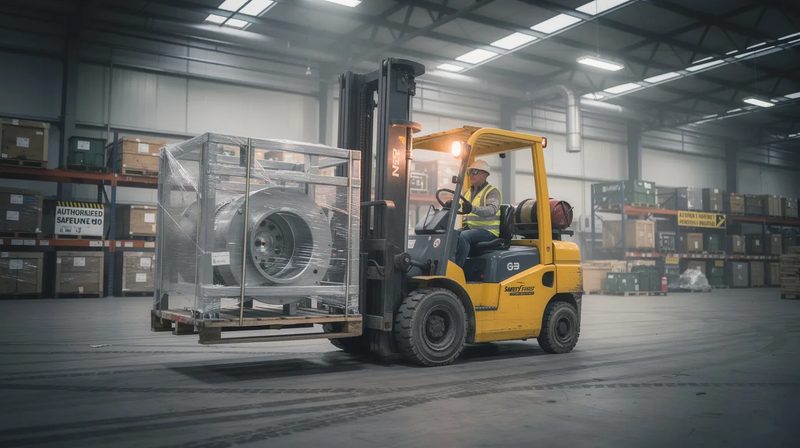
Industrial machinery auctions serve as a critical link between sellers of specialised metalworking equipment and targeted buyer pools across Belgium, Europe, and beyond. For companies considering the sale of CNC machines, complete workshops, or individual production assets, understanding how these structured sales processes function can support better planning and more effective outcomes.
This article examines the market dynamics behind metalworking machinery auctions, the types of equipment commonly sold, how international demand influences pricing, and the practical considerations that shape successful sales.
Why metalworking machinery has a specialised international market
Metalworking machinery encompasses a niche B2B ecosystem defined by precision engineering requirements. CNC machines, including computer numerical control lathes and machining centres, process components to tolerances measured in hundredths of millimetres. Milling machines shape complex geometries, while grinding machines achieve sub-micron surface finishes essential for aerospace and medical applications. This technical specificity creates a market where buyers evaluate assets based on detailed manufacturing processes requirements rather than general condition alone.
The demand for these machines differs substantially between regions. Germany’s manufacturing base, particularly the Mittelstand sector, drives strong demand for sheet metal machinery including laser cutters and press brakes for automotive subcontracting. Poland’s growing electric vehicle battery casing production creates interest in mid-generation CNC equipment from 2008–2015. Southern European markets in Italy and Spain show consistent interest in used CNC machine sales for aerospace component production.
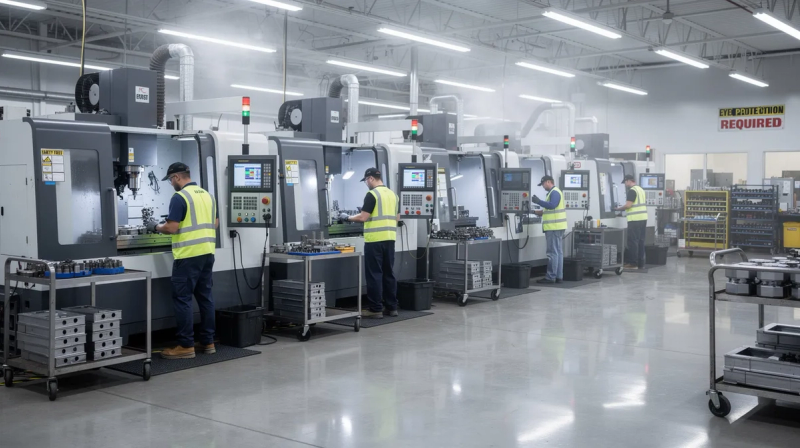
Industrial buyers evaluate metalworking machines by specific factors that general equipment listings rarely address:
| Evaluation Factor | Examples | Impact on Value |
|---|---|---|
| Configuration | 5-axis vs 3-axis, spindle power, axis travels | 5-axis typically commands 2x the price of equivalent 3-axis |
| Control type | Siemens 840D, Fanuc 31i, Heidenhain | Affects CAM compatibility and retrofit potential |
| Automation level | Robot loading, pallet pools, automatic tool changers | Adds 20-30% to comparable non-automated models |
| Maintenance history | Hour meters, service records, documented repairs | Well-documented machines see higher participation rates |
Local resale channels often limit value capture for Belgian sellers. A metalworking machinery auction centralises international buyers, allowing them to compare assets from multiple locations, such as Belgium, Netherlands, France or Germany, on a single platform. This concentration of demand creates price discovery that isolated local sales cannot achieve.
The distinction between general used metalworking equipment listings and a time-bound auction with fixed viewing days, bidding windows, and clear closing dates matters for both buyers and sellers. Many auctions offer items for sale through live webcasts or timed online bidding, allowing for remote participation from multiple time zones. Online machinery auctions enable buyers to browse catalogs, place bids, and track lots remotely, making it convenient to participate from anywhere.
Which machines are commonly sold through industrial auctions
Industrial auctions can cover single high-value cnc equipment or entire production lines and complete workshops from closing or restructuring operations. Upcoming metalworking machinery auctions in May 2026 feature equipment from major manufacturing facility closures, including CNC machining centres, fabrication tools, and standard toolroom machinery.
CNC machine tools
CNC machining centres represent a significant portion of industrial auction volume. CNC machining centers in auctions include vertical and horizontal models, as well as high-speed and 5-axis machines. These range from compact 3-axis vertical machining centres suitable for job shops to large horizontal machining centres with pallet pools for high-volume production.
CNC lathes with bar feeders attract precision turning operations. Models with Y-axis capability, live tooling, and sub-spindles appeal to manufacturers producing complex turned components. Metalworking machinery includes various types such as lathes, milling machines, and grinding machines, each designed for specific machining processes.
Metalworking auctions frequently feature both CNC and conventional machinery suitable for manufacturing and fabrication. This includes legacy equipment that remains capable of producing quality components despite its age.
Sheet metal machinery
Common sheet metal machinery sale items include:
- Laser cutting machines: 4-6kW fibre lasers from 2018–2022 see strong demand. Flame cutting, plasma cutting, and laser cutting are methods of cutting metals that do not require traditional tools, each offering different levels of precision and application.
- Press brakes: CNC press brakes with multi-axis backgauges, ranging from 60 to 300+ tonnes
- Punching machines: CNC turret punch presses and combination punch-laser systems
- Shears and plate rolling machines: Hydraulic guillotine shears and 4-roll plate bending systems
Fabrication and welding equipment
Fabrication-focused auctions typically include MIG/MAG and TIG welding machines, robotic welding cells with positioners, welding tables, and extraction systems. These items often appear together in a CNC machine auction when workshops are liquidated as complete units.
Auxiliary equipment
Machinery auctions provide buyers with access to a broad range of equipment, including workshop tools, production line machinery, and specialist engineering systems. Auctions generally categorize metalworking equipment into several key areas:
- Sawing machines: Band saws, circular saws, and beam saws for metal cutting
- Toolroom equipment: Drill presses, conventional milling machines, surface grinders
- Metrology: Coordinate measuring machines (CMMs), height gauges, measuring tools
- Tooling and accessories: Tool holders, clamping systems, presetters
- Internal transport: Forklifts, pallet trucks, overhead cranes
Complete workshop auctions in 2024–2026 often combine metalworking machines, power tools, storage systems, and office equipment in one coordinated industrial machinery auction event. This approach enables sellers to achieve comprehensive inventory clearance while giving buyers opportunity to equip entire operations.
How international demand influences metalworking machinery sales
The demand for CNC machines and other metalworking equipment is cyclical and linked to regional investment peaks in automotive, aerospace, energy, and subcontracting sectors. Understanding these patterns helps sellers time their sales and identify which buyer groups are most active.
Consider a practical example: a 2017 5-axis machining centre with pallet changer may attract strong bids from German aerospace subcontractors expanding their capacity for complex aluminium components. Meanwhile, a 2008 3-axis VMC might see more interest from SMEs in Eastern Europe or North Africa seeking reliable, cost-effective additions to their machine tools inventory.
Buying through machinery auctions often results in competitive pricing, which can deliver better value than traditional purchasing channels. This competitive dynamic benefits sellers when multiple qualified buyers participate simultaneously.
Several factors influence where used metalworking equipment finds its next owner:
| Factor | Effect on Buyer Behaviour |
|---|---|
| Currency fluctuations | EUR weakness increases export attractiveness to non-EU buyers |
| Regional labour costs | Higher costs in Western Europe drive automation investment; lower costs in CEE favour manual-friendly equipment |
| Financing rates | Higher rates favour lower-priced used machinery over new capital expenditure |
| Transport and logistics | Heavier machines (grinding machines, large press brakes) face higher shipping costs affecting buyer calculations |
International buyers of metalworking machinery assess transport, rigging, and import duties carefully. Clear logistical information in auction catalogues, including machine weights, floor loading requirements and access specifications, increases cross-border participation by reducing uncertainty.
A structured metalworking machinery auction with multi-language catalogues (English, German, French, Polish) and defined closing times in Central European Time supports active bidding from different regions. This approach accommodates buyers across multiple time zones and markets.
The role of machine configuration, age and automation level
Two machines of the same model can achieve very different results at auction depending on installed options, operating hours, and automation packages. The biggest price drivers for used metalworking equipment in Belgium typically include the expected ‘catch-up’ work the buyer anticipates after delivery, which can significantly influence the final cost.
Configuration factors
Configuration elements that influence buyer interest include:
- Spindle specifications: Power (10-50hp), speed (up to 24,000 RPM), and taper size
- Axis travels: Working envelope dimensions (X, Y, Z travels)
- Tooling systems: Number of tool positions, tool changer speed
- Coolant and chip management: High-pressure through-spindle coolant, chip conveyors
- Probing and measurement: In-process probing, tool breakage detection
- Rotary tables: 4th and 5th axis capability, tilting heads
- Software options: Advanced cycles, high-speed machining packages
A Haas UMC-750 5-axis with 40-tool automatic tool changer and probing system may achieve €180,000 while a base configuration of the same model realises €120,000.
Age brackets
Age brackets commonly observed in industrial auctions attract different buyer groups:
| Generation | Age Range | Typical Price Range | Primary Buyers |
|---|---|---|---|
| Current | 0-7 years | 70-100% of original | End-users seeking production-ready equipment |
| Mid-life | 8-15 years | 40-70% of original | Retrofit specialists, growing SMEs |
| Legacy | >15 years | 10-30% of original | Export markets, budget-conscious operations |
Ongoing repairs, maintenance, and expertise can extend the service life of metalworking machines, even after their original use-by date has passed. The task of maintaining and repairing metalworking machines is intended for trained experts and specialist companies, which can enhance the productivity, precision, rigidity, and functionality of used machines.
Automation level
Automation directly impacts demand in 2026’s labour market. Pallet systems, robot loading, automatic tool changers with 80+ positions, and part conveyors command significant premiums amid ongoing skilled labour shortages.
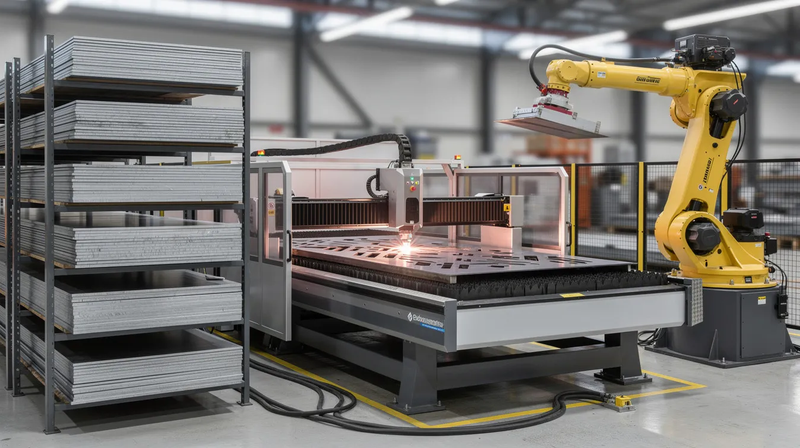
An automated laser cutting line with tower storage system attracts buyers focused on high throughput and continuous operation. A simpler standalone laser appeals to smaller workshops upgrading from older CO₂ machines with different budget constraints.
Configuration and automation also link to maintenance costs and retrofit potential. Machines with modern Siemens or Fanuc drives and controls might be easier to retrofit with new CNC controllers or automation packages than very old models with obsolete components. Older or orphan brands in auctions may be less expensive, but finding replacement parts can be difficult or prohibitively expensive.
Different buyer groups and how they value machines
Several distinct buyer segments participate in machine tools auctions, each with different priorities and valuation approaches.
End-users (manufacturers)
Production managers value production capacity, reliability, and compatibility with existing tooling and CAM systems. They calculate whether a machine integrates efficiently with current operations, considering factors like control compatibility, tooling standardisation, and operator familiarity. High quality equipment that matches their existing manufacturing processes receives priority.
Dealers and traders
Dealers prioritise resale potential, geographic demand patterns, and logistics efficiency. They evaluate whether equipment can be transported economically, warehoused efficiently, and resold within their distribution networks. Metalworking equipment resale margins depend on buying at appropriate prices and having established customer relationships in specific markets or sectors.
Retrofit specialists
Retrofit companies look for solid mechanical bases, like heavy cast iron frames on older milling machines and grinding machines, that justify investment in new drives, controls, and safety upgrades. A robust 1990s German-built machine with worn controls but excellent geometric accuracy may be more valuable to this buyer group than a lightly-used machine with an outdated control architecture.
Investment cycle considerations
Regional investment cycles drive localised demand:
- 2026–2028 automotive EV investments increase demand for battery casing equipment
- Offshore wind projects create need for large-format fabrication equipment
- Defence contracts may drive precision metalworking demand in specific regions
Each buyer group calculates value differently. End-users focus on payback periods and production integration. Dealers evaluate resale timelines and margin potential. Retrofit specialists assess mechanical condition versus upgrade costs.
How a structured industrial auction process works
Structured industrial auctions follow a clear sequence: preparation, marketing, inspection, bidding, payment, and removal of equipment. The auction process is transparent, featuring clear bidding structures and inspection reports that support confident decision-making for buyers.
Preparation phase
The preparation phase involves comprehensive inventory of all metalworking machinery, documentation of serial numbers and technical data, photography and video capture, and basic functional checks where possible. This foundation determines the quality of the eventual catalogue and buyer interest.
Key preparation activities include:
- Recording machine specifications from nameplates and documentation
- Photographing machines from multiple angles
- Creating video walkthroughs for complex equipment
- Testing machine functions where operationally feasible
- Gathering maintenance records and service history
Catalogue creation
Catalogue creation groups assets logically, like cnc machines, sheet metal equipment, welding systems and tooling, and assigns lot numbers. Clear, factual descriptions reflect actual condition without overstating or understating machine status.
Marketing and buyer activation
Marketing activities include targeted email campaigns to existing industrial buyers, listing on specialised industrial auction Belgium platforms, sector-specific media exposure, and direct outreach to known buyers of similar machines. This activation phase determines the breadth and depth of buyer participation.
Inspection phase
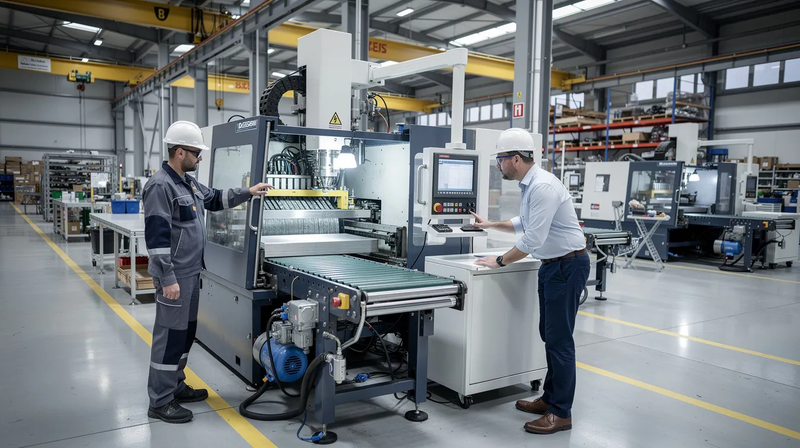
Fixed viewing days or visit-by-appointment periods allow buyers to see machines under power when feasible, ask technical questions, and verify documentation. Most industrial equipment in auctions is sold “as-is”, meaning any mechanical issues or missing parts are the buyer’s responsibility after the sale. This makes inspection crucial for informed bidding.
Bidding phase
The bidding phase typically uses online-only auctions with staggered closing times per lot, automatic bid extensions to prevent sniping, transparent bid history, and clear buyer terms. Machinery auctions allow for faster acquisition of assets, enabling buyers to purchase equipment quickly without long lead times.
Total “Landed” Cost at auctions includes the buyer’s premium, sales tax, and rigging/shipping fees, which can sometimes exceed the machine’s value. Buyers should factor all costs when determining bid levels.
Post-auction coordination
Post-auction activities include invoicing, payment deadlines, coordination with rigging companies, and scheduled collection windows that minimise disruption at the seller’s site. The total cost of ownership for used metalworking equipment includes the purchase price plus installation, inspection, and maintenance costs to ensure reliable performance.
Structured sales processes, such as those used by Dome Auctions Belgium, emphasise planning, clear communication, and professional asset presentation without promising specific price outcomes.
Why timing matters in metalworking equipment sales
The timing of a metalworking machinery auction often follows major business decisions: automation projects, capacity upgrades, restructuring, site closures, or succession. Understanding these timing dynamics supports better planning.
Common 2024–2027 scenarios
Several situations commonly trigger metalworking equipment sales:
- Companies replacing older CNC lathes with robotic cells
- Consolidation of multiple workshops into a single site
- Production closure after strategic shift to outsourcing
- Succession planning in family-owned metal fabrication businesses
- Technology upgrades driven by Industry 4.0 adoption
Planning timeline benefits
Early planning, typically 3–6 months before a shutdown or handover date, allows for:
- Comprehensive inventory and cataloguing
- Broader international marketing reach
- Multiple viewing opportunities for potential buyers
- Time for buyers to arrange financing and transport
- Better coordination with internal project milestones
Macroeconomic timing
Macroeconomic timing matters. Selling during periods of strong sector investment, such as growth in construction steel fabrication or energy components, can lead to more active bidding for press brakes, sawing machines, and related fabrication equipment. Industry data suggests Q3-Q4 timing can yield 15-25% higher returns during peak investment cycles.
Risks of rushed disposals
Rushed disposals create risks: limited buyer activation, compressed viewing schedules, and insufficient time for buyers to arrange financing and transport. These factors can affect realised prices and overall sale outcomes.
Companies should map equipment sale timing to internal project milestones, like commissioning of new lines, delivery dates for new CNC machines or lease terminations, to avoid capacity gaps or unnecessary rental and storage costs.
Strategic considerations for industrial companies planning a metalworking machinery auction
A metalworking machinery auction is a strategic project that should align with the company’s production, financial, and commercial objectives. Thoughtful planning supports better outcomes across all dimensions.
Asset segmentation
Companies should segment equipment into strategic categories:
- Core assets: Equipment essential for ongoing operations
- Immediate sale candidates: Surplus machines ready for disposal
- Phased sale items: Equipment to be released as replacements arrive
- Scrap items: Assets with condition or compliance issues precluding resale
Assessment and compliance
A realistic assessment of maintenance costs, remaining technical life, and compliance with current safety and environmental regulations determines which assets to include in an industrial machinery auction. Machines lacking CE declarations or with significant safety deficiencies may require different disposition approaches.
The total cost of ownership for used metalworking equipment includes the purchase price plus all expenses necessary to make the equipment operational and maintain its reliability over time, such as installation, inspection, and ongoing maintenance. Buyers consider this when evaluating your equipment.
Coordination requirements
Key coordination topics include:
- Production run-out dates and final orders
- Decommissioning and cleaning procedures
- Data and program backup from CNC controls
- Removal of company intellectual property before viewings
- Access arrangements for viewing and removal periods
Documentation importance
Preventive maintenance for used metalworking equipment is essential to keep it reliable, reduce unexpected failures, and protect the investment, focusing on contamination, wear, environmental exposure, and missed verification. Documentation of this maintenance history significantly increases buyer confidence.
Essential documentation includes:
- Service records and maintenance logs
- CE declarations and conformity certificates
- Operating manuals and electrical diagrams
- Software licenses and parameter backups
- Calibration and inspection certificates
Channel evaluation
Companies should evaluate different sale channels based on internal resources, time horizon, and the diversity and geographic spread of their equipment. Direct sale, dealer purchase, and industrial auction each suit different situations.
Collaboration with a structured auction organiser (for example Dome Auctions Belgium in the Benelux) can support planning, international buyer activation, and coordination, while the seller retains decision-making authority on scope and timing.
Digital visibility and marketing for metalworking machinery auctions
Even the best auction catalogue for CNC machines or sheet metal machinery needs strong digital visibility to reach the right international buyer segments. Effective marketing determines whether specialised equipment reaches its optimal market.
Search engine optimisation
SEO targets search terms such as “metalworking machinery auction”, “used CNC machine sale”, “machine tools auction”, and “industrial auction Belgium” in multiple languages. This organic visibility helps qualified buyers discover relevant opportunities through internet searches.
Paid advertising
PPC and remarketing campaigns on search and social platforms can activate specific buyer groups, such as owners of small fabrication shops searching for press brakes or subcontractors looking to expand CNC capacity. These targeted approaches reach buyers actively seeking equipment.
Email marketing
Specialised email marketing uses segmented mailing lists by machine type (CNC, milling, grinding machines, welding, sawing) and by region to match assets with likely buyers. This direct approach ensures relevant listings reach qualified prospects.
Landing page requirements
Professional landing pages for each auction should feature:
- Clear structure with logical lot groupings
- Visual documentation including photos and videos
- Key dates for viewing and bidding
- Easy navigation between lots
- Technical specifications in accessible formats
Frequently Asked Questions
How far in advance should we plan a metalworking machinery auction?
Planning 3–6 months before the intended shutdown or handover date allows adequate time for inventory, cataloguing, international marketing, viewing days, and coordinated removal. This timeline ensures proper documentation and broad buyer activation.
Larger projects involving complete workshops or multiple sites in Belgium, the Netherlands, and Germany may require 6–9 months of preparation. The complexity of multi-location sales demands additional coordination time.
Aligning the project plan with internal milestones, like the delivery of new CNC machines, completion of automation projects or lease terminations, ensures smooth transitions without operational gaps.
Can we include both high-end CNC machines and smaller power tools in the same auction?
It is common to combine premium assets (5-axis machining centres, modern laser cutting machines) with conventional machines, power tools, and workshop equipment in one coordinated metalworking machinery auction. This approach provides comprehensive inventory clearance.
Structuring the catalogue into clear sections, like CNC machines, sheet metal, fabrication, tooling and accessories, and internal transport, helps buyers quickly find relevant lots. This categorisation supports efficient navigation and focused bidding.
Smaller items can be grouped into logical lots (tooling sets, workbenches, storage systems) to simplify bidding and logistics while ensuring all items find appropriate buyers.
What information do buyers expect in a professional auction catalogue?
Essential data includes make, model, year of manufacture, control type, key technical specifications (travels, capacities, tonnage, laser power), and any known upgrades or retrofits. Complete specifications enable informed purchasing decisions.
Realistic condition descriptions, visible wear notation, maintenance records, and indication of whether machines can be seen under power are critical. When inspecting used metalworking machinery, it is crucial to evaluate operating hours, signs of wear, and the general condition of the equipment to gain insights into its performance and reliability.
High-quality photos, short videos where possible, and practical details such as location, floor loading requirements, and approximate machine weight complete a professional catalogue.
How are dismantling, loading, and transport typically organised after an auction?
Sellers typically define collection windows and basic site rules in advance, while buyers are responsible for hiring riggers and transport companies that comply with those conditions. Clear communication of requirements prevents delays.
For larger or heavier items (press brakes, large milling machines, gantry systems), sellers may consider pre-selecting or recommending experienced rigging providers familiar with the site. Clear communication of loading points, access restrictions, and available utilities reduces delays and safety risks.
What about data and software on CNC machines being sold?
Sellers should back up and securely erase sensitive production data, customer programs, and proprietary process know-how from CNC controls before viewings and handover. This protects company intellectual property while preparing machines for sale.
Clarifying which software licenses, options, and parameter sets are included in the sale, and documenting this in the lot description and handover protocol, prevents post-sale disputes. Buyers typically expect machines supplied with standard OEM software, parameter backups, and any hardware dongles required for operation.
How should buyers prepare for inspecting equipment at auction viewings?
Participants should physically inspect motors, wiring, and oil levels at auction preview days to avoid bidding blind. A practical approach to inspecting metalworking machinery includes performing a test under real conditions by producing a defined sample piece, which allows the buyer to assess the machine’s production speed and dimensional accuracy.
Participants should verify the machinery’s voltage and phase requirements to ensure compatibility with their shop’s capabilities. Buyers should consider the minimal expectations for tolerances, complexity, and productivity when inspecting used metalworking machinery to ensure it meets their operational needs.