
When industrial companies decide to sell machinery, one of the first questions is often: what is it worth? The answer is rarely straightforward. Unlike financial assets with transparent market prices, industrial machine value emerges from a complex interplay of supply, demand, technical factors, and buyer competition. This article explains how market value is formed and why understanding these dynamics is essential for making informed decisions about selling industrial equipment.
Why machine value is not the same as book value
Many business owners assume that the value recorded on their balance sheet reflects what their machines are worth in a sale. In practice, accounting depreciation schedules and actual used machinery market value often tell very different stories.
Book value is calculated as historical cost minus accumulated depreciation. This figure serves purposes such as financial reporting and tax compliance, but it is not designed to reflect market pricing. Depreciation schedules, whether straight-line or accelerated, are accounting estimates, not measures of actual worth.
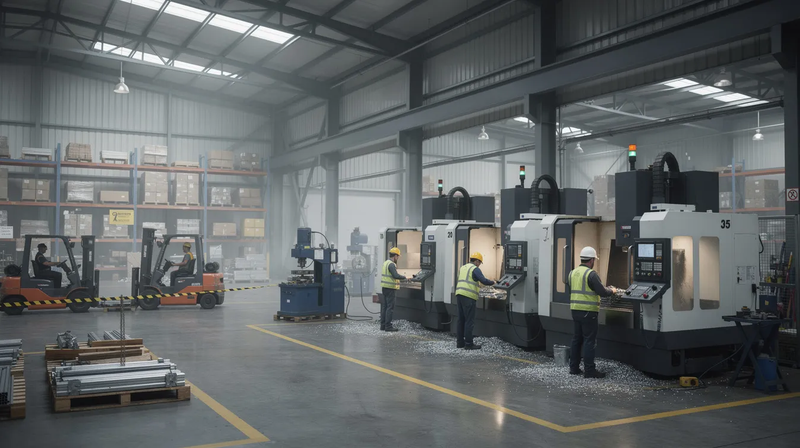
Consider a concrete example: a 2014 5-axis CNC milling machine that is fully depreciated on the balance sheet may still transact for €120,000 in 2026. Why? Because industrial machine demand in aerospace and medical manufacturing sectors remains strong for high-precision equipment. The machine’s productivity, payback period for the buyer, and available alternatives matter far more than its book entry.
The depreciation curve for machinery is steepest in the first 3–5 years and flattens around the machine’s residual value. However, this accounting pattern does not capture technical condition, market scarcity, or sector-specific demand. Lenders and auditors may reference book value, but serious buyers in the used machinery market focus on what the machine can produce and what comparable assets have recently sold for.
This is the essence of machine depreciation vs market value: depreciation curves are estimates, whereas fair market value is discovered through live negotiations and actual transactions.
Key factors influencing industrial machine value
No single factor determines industrial machine value. Instead, it is the combination of technical, economic, and market elements at a specific moment in time that shapes what buyers are willing to pay.
The value of industrial machinery is influenced by physical condition, technical features, and market demand. To understand pricing, one must examine several interrelated factors.
Technical condition, age and remaining useful life
Age is only a proxy for value. The real drivers are operational hours, wear patterns, and realistic remaining useful life. The actual mechanical condition of industrial machinery is the factor with the greatest impact on its market value, with a machine in perfect condition potentially worth twice as much as one with significant wear.
- Buyers inspect spindle play on CNC machines, boom wear on excavators, and mast and battery state on forklifts to adjust their offers accordingly.
- Technical inspection of machinery should evaluate structural integrity and system functionality to assess its condition accurately.
- Consider two 2019 laser cutters: one with 4,000 hours and full service records may sell 25–30% higher than another with 18,000 hours and incomplete maintenance history.
- Preventive maintenance logs, OEM service contracts, and recent retrofits (such as a new PLC installed in 2023) positively influence used machinery market value. A documented maintenance history can increase the value of industrial machinery, as it reduces buyer uncertainty about future breakdowns and serves as a tangible value argument in negotiations.
- Visible neglect, such as oil leaks, missing guards or non-working safety switches, quickly reduces buyer confidence and triggers lower bids, contributing to unplanned downtime concerns.
Specifications, brand and configuration
Technical capability directly links to market size and willingness to pay.
- Higher capacity or more flexible specifications (a 5-axis CNC vs 3-axis, a 2.5-ton reach truck vs 1.6-ton) open access to more applications and more buyers.
- Brand reputation significantly influences the residual value of industrial machinery. Leading European manufacturers such as DMG Mori, Trumpf, or Krones maintain 20–40% higher market values than lower-end brands due to factors like build quality, service networks, and spare parts availability.
- Accessories and tooling can add 15–30% to the total value of industrial machinery. Tool changers, conveyors, safety enclosures and vision systems usually add value, but only if they match what target sectors commonly request.
- Overly niche configurations (custom jigs, highly specialised tooling) can narrow the buyer pool and reduce the achievable price unless sold into the same niche.
Regulatory, safety and ESG considerations
Standards and policies increasingly affect industrial machine demand and value.
- Specific regulatory drivers such as EU machinery regulation, CE marking, updated safety guards, and dust extraction standards make compliant machines more attractive in 2026 and beyond.
- In 2026, regulatory deadlines for engine and environmental standards are expected to significantly influence buyer behavior, prompting pre-buy demand for compliant machinery before new regulations take effect. Stage V-compliant diesel construction machines in Europe command higher resale value than earlier emission stages as 2026–2028 environmental rules tighten.
- Governments in 28 countries introduced subsidies or tax benefits in 2023–2024 to encourage cleaner machinery operations, boosting eco-compliant machinery installations.
- Non-compliant or undocumented machines may only sell into non-EU or less regulated markets at a discount, shifting where demand comes from geographically. As emission regulations tighten, the resale value of industrial machinery is expected to decline post-2026, as buyers will prioritize newer, compliant models over older machinery that does not meet new standards.
- ESG pressure is real: many large buyers now prefer energy-efficient compressors, variable-speed drives, and hybrid or electric forklifts, which lifts their relative industrial machine value. In 2024, 18% of all new machinery units utilized electric or hybrid engines, indicating a growing trend towards sustainability in the industrial sector. This supports the circular economy approach many manufacturers now pursue.
The role of supply and demand in pricing industrial equipment
Supply and demand industrial equipment dynamics are straightforward in principle: how many comparable machines are for sale versus how many serious buyers are active at a given time? Industrial machine value at the moment of sale reflects this balance more than any internal cost calculation by the seller.
Market demand influences machinery prices, where high demand or low supply can increase machinery value. During the 2021–2022 European forklift shortage, used 3–5 ton models transacted at or above original purchase levels (€30,000–€50,000 for low-hour electrics) because new units had delivery delays exceeding 12 months.
Conversely, oversupply, such as many printing presses released during sector consolidation, depresses used machinery market value even for technically sound heavy equipment. The second-hand industrial machinery market is not static; it experiences periods of higher demand linked to industrial investment cycles, with certain types of machinery maintaining steady demand regardless of the economic cycle.
Demand for used machinery peaks in 2026 due to upcoming regulatory and emission deadlines, which influence buyer behavior and create urgency in the market. In 2026, buyers are increasingly treating used heavy machinery as a strategic acquisition, prioritizing deployment speed and certainty over novelty.
How availability of comparable machines shapes value
“Comparables” serve as a practical tool for both sellers and buyers.
- Buyers benchmark asking prices against recent transactions for similar equipment on public platforms and in auction results.
- If only two 2019 2000-bar plastic injection moulding machines of a certain brand are for sale in Europe, and both attract strong bidder interest, this raises the perceived benchmark for market price.
- Contrast this with commodity-type assets (standard pallet stackers, small air compressors) where dozens of units on the market cap the maximum price a single seller can achieve.
- Structured sales channels with transparent reporting (such as multi-seller auction events) create traceable reference prices that influence future negotiations and support fair market value assessments.
Lead times, new equipment pricing and substitution
The new equipment market indirectly sets a ceiling or floor for used prices.
- High new-machine prices, long OEM lead times, or component shortages (as seen in 2022–2024 semiconductor supply issues) increase willingness to pay for used equipment.
- A company needing an additional packaging line in Q3 2026 for a new FMCG contract may pay a premium for a used line that can be installed in 8 weeks instead of waiting 10–12 months for new delivery.
- When manufacturers offer aggressive discounts or financing packages on new models, the industrial equipment resale value of older generations often softens quickly.
- Buyers always compare: “For this price of a 2017 excavator, how close am I to a 2026 model with lower fuel consumption and warranty?” This calculation caps used prices in some segments.
Sector-specific demand and regional market differences
Industrial machine demand is not uniform. It varies strongly by sector (food, automotive, logistics, construction) and by region (Benelux vs Eastern Europe vs Middle East).
The same machine can be “common” in one sector or region (and thus priced competitively) but rare and valuable in another. Understanding where active projects and capex budgets exist is crucial when deciding where and how to sell industrial machines.
Real investment cycles shape demand: logistics warehouse automation is rising across Europe 2024–2027; renewable energy and battery plants are expanding in Germany, Poland, and Spain; construction infrastructure programmes continue in Central and Eastern Europe.
Examples of sector-driven industrial machine value
| Sector | Equipment Types | Market Drivers |
|---|---|---|
| Food & beverage | Stainless steel tanks, bottling lines, labelling machines | Hygiene norms, Western European demand |
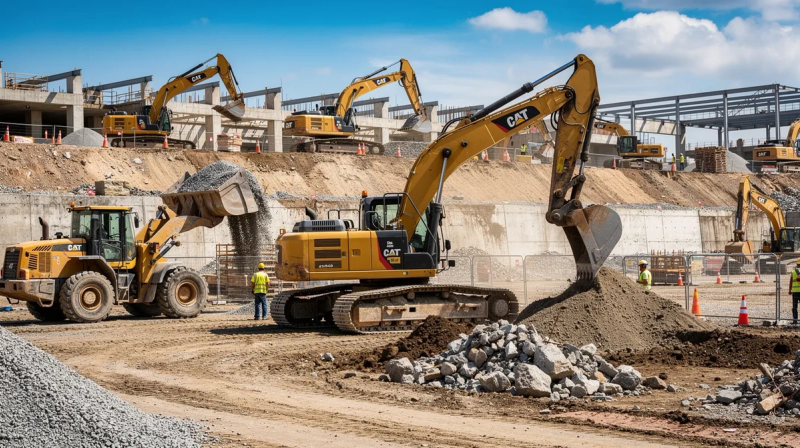
| Construction & infrastructure | Wheel loaders, excavators, earth moving equipment, concrete pumps | CEE and Middle East infrastructure budgets |
| Logistics & e-commerce | Automated conveyors, sorters, electric forklifts | Fulfilment centre and 3PL hub expansion |
- In automotive and precision engineering, 5-axis CNC machining centres and robot cells may gain value when EV-related investments peak. Heavy machinery in this sector commands attention from customers in South Korea and the Asia Pacific region.
- In food and beverage, stainless steel processing tanks and bottling lines that meet hygiene norms remain highly liquid assets in Western Europe.
- Construction and infrastructure sees wheel loaders, excavators, and heavy duty equipment gaining value when public infrastructure budgets are released, especially in Eastern Europe and the Middle East.
- Logistics and e-commerce drives demand for automated conveyor systems, sorters, and electric forklifts in regions where fulfilment centres expand.
Regional differences and cross-border opportunities
Local demand and regulatory conditions shape what buyers are willing to pay, creating geographic price gaps.
- Printing and paper machinery may face shrinking demand in Western Europe but find active buyers in Turkey, India, or other markets in emerging markets.
- Shipping costs, import duties, and local standards (voltage, safety norms) influence whether exporting is attractive for a seller in Belgium or the Netherlands.
- Sellers focusing only on their national market may underestimate the price international buyers are willing to pay, particularly for late-model or specialised assets.
- Intermediaries and auction platforms with international reach, like Dome Auctions Belgium, often bridge these regional valuation differences by bringing cross-border bidders into one process.
The impact of international buyers on industrial machine value
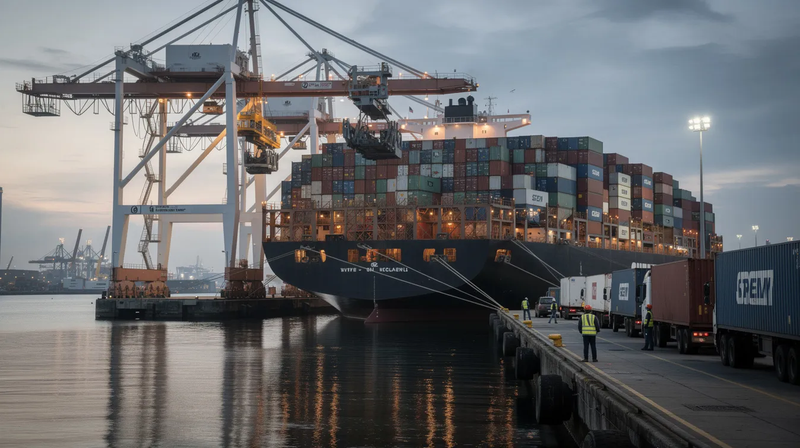
Modern industrial equipment trade is global. Buyers from other EU countries, the UK, Middle East, North Africa, and Asia Pacific regularly participate in European sales.
International interest can raise used machinery market value because some regions have stronger demand, fewer local suppliers, or different cost structures. For example, a Belgian packaging line from 2019 might receive bids from Germany, Poland, and the UAE, with the highest offer coming from outside the domestic market due to urgent capacity needs in agricultural equipment processing or assembly operations.
The global machinery manufacturing market is expected to grow from USD 693.7 million in 2024 to USD 1,070.23 million by 2033, with a CAGR of approximately 5.57% from 2025 to 2033. In 2024, the machinery manufacturing market growth, driven by rapid industrialization, urbanization, and automation, also influences the demand for used machinery.
Cross-border demand and niche applications
Niche machine types benefit disproportionately from international reach.
- Specialised tube-bending machines, stone-cutting saws, or glass-processing lines may have only a handful of potential users per country but a viable market when searched across Europe and the Middle East.
- International buyers may accept higher prices if the machine solves an immediate production bottleneck and no local alternatives are available.
- Language barriers, documentation in English, and availability of remote diagnostics or video tours influence the comfort level and bids of cross-border buyers.
- Well-documented technical files, CE declarations, and manuals in major languages materially support global machinery market value. Agricultural machinery and construction machinery with proper documentation attract broader interest.
Role of structured sales processes in reaching international buyers
Structured processes improve access to international buyers and price discovery machinery.
- Organised online auctions, multi-day sales events, and timed bidding windows allow buyers from multiple time zones to participate in the same process.
- Dome Auctions Belgium is an example of a platform where Belgian and European industrial assets are marketed internationally, generating simultaneous interest from buyers in several regions.
- Transparent processes, standardised documentation, and clear timelines give international buyers confidence to place competitive bids without site visits.
- More qualified bidders usually lead to a more accurate reflection of industrial equipment resale value than private negotiations with one or two local contacts.
How competition between buyers influences price discovery
Price discovery machinery refers to the process through which the actual transaction price for industrial machines emerges from interaction between multiple buyers and sellers.
Competition between buyers machinery is the main mechanism pushing the final sale price towards true fair market value, rather than initial asking prices or internal spreadsheets. The competitive landscape directly shapes outcomes.
Consider this example: a 2017 3-ton electric forklift initially listed at €9,000 sells for €11,500 after several buyers bid against each other in a time-limited online auction. In thin markets with few buyers and little transparency, prices may be lower or more volatile. Structured processes help mitigate this by concentrating demand.
From asking price to discovered market value
Asking prices on listing sites are often aspirational, not proof of actual industrial machine value.
- Static listings that remain unsold for months contrast sharply with auction results or closed-deal records that reveal what buyers truly pay.
- A CNC lathe example: several similar machines advertised at €80,000–€90,000, while realised transaction data shows closing prices closer to €70,000.
- Incremental bidding gradually reveals the highest price at which at least one buyer is still willing to transact.
- In some cases, competition reveals that value is higher than the seller expected, especially when international buyers with urgent needs participate.
The role of transparency and structured timelines
Process elements that support fair and efficient price discovery machinery include:
- Clear start and end dates for bidding, uniform information packages, and inspection opportunities create a level playing field.
- In a multi-asset auction of a closed factory, buyers know exactly when lots will close, which encourages serious, time-bound bidding.
- Confidential private offers with no deadline may lead to lower competition and more conservative pricing.
- Independent platforms (such as Dome Auctions Belgium) can provide post-sale reporting, helping sellers and advisors better understand used machinery market value benchmarks for future decisions.
Understanding realistic market value when you sell industrial machines
Realistic industrial machine value is a range informed by market conditions, comparables, and buyer competition; not a single perfect number calculated in isolation.
Sellers should combine internal knowledge (book value, remaining useful life, original cost) with external signals (recent comparable sales, buyer enquiries, sector trends). Realistic value also reflects transaction costs, dismantling, transport, and possible refurbishment costs a buyer will incur.
A company in Belgium planning to sell a complete packaging line in 2026 might gather data on similar lines sold in Germany, the Netherlands, and Italy to set expectations. Exposing machines to sufficient qualified buyers, including cross-border demand, is essential to avoid both underpricing and unsold inventory.
For transactions exceeding €20,000–30,000, hiring a certified appraiser is recommended for unbiased valuation. A professional appraiser can provide clarity on liquidation value versus fair market value.
Practical steps to gauge used machinery market value
Professional appraisers use three main methods for valuing industrial machinery: the market method, the cost method, and the income method, which can be applied individually or in combination depending on the machinery type and valuation purpose.
| Valuation Method | Description | Best Application |
|---|---|---|
| Market method | Compares equipment with similar equipment that has been recently sold or is currently for sale | Machinery with an active secondary market |
| Cost method | Starts from replacement cost new and applies depreciation based on usage time and physical condition | Legacy equipment or specialised machines |
| Income method | Determines value based on income-generating capacity over remaining useful life | Complete production lines or specialised equipment |
Practical steps for small and medium enterprises and medium enterprises:
- Document all relevant details: brand, model, year, hours, serial number, options, software versions, and maintenance history. Support with photos and inspection videos.
- Research recent transaction data on specialised marketplaces, auction results, and industry reports, focusing on machines sold (not just advertised) in 2024–2026.
- Talk to several potential buyers (dealers, end users, auction houses) to understand current industrial machine demand for your specific assets.
- Consider running a structured sale process with a defined timeline, ideally via a platform with international reach, to test the market and support robust price discovery machinery.
Balancing speed, risk and value optimisation
Trade-offs exist between selling quickly and maximising price.
- Urgent sales (insolvency, site closure deadlines) usually prioritise speed over extracting every last euro of industrial equipment resale value.
- Allowing sufficient time for marketing, inspections, and competitive bidding typically improves outcomes, especially for high-value assets like CNC centres or complete process lines worth hundreds of thousands of euros.
- Compare a rushed private sale of a mixed fleet of excavators, loaders, and access platforms to a 4–6 week structured auction process with global promotion. The difference in proceeds can be substantial.
- Define your primary objective (cash by a certain date vs value maximisation) and choose the sales method that aligns with that objective.
Frequently asked questions
How often should we reassess the market value of our industrial machines?
Reassessment frequency depends on sector volatility and asset type. As a rule of thumb, companies in fast-changing industries (electronics, automotive) should review key assets every 12–24 months. A Belgian metalworking firm might revisit the value of its CNC fleet in 2024, 2025, and 2026 as tool automation levels and control systems evolve. As of 2024, 59% of new industrial machinery units manufactured were integrated with automation modules or digital diagnostics, reflecting significant technology shifts. Major events such as new regulations, OEM model launches, or significant capex cycles are good triggers for a fresh value check. Machinery with outdated technology suffers from functional obsolescence, significantly reducing its value. A professional valuation can help determine the right timing for a sale to capture growth in specific sectors.
Is it worth refurbishing or upgrading machines before selling them?
Light refurbishments that improve reliability or compliance (replacing worn components, updating safety guards, servicing hydraulics) often pay back through higher bids. Large upgrades, like full CNC retrofits or adding automation cells, should be evaluated carefully; they may make sense if they open access to a much broader buyer base or extend machine life substantially. A practical example: a 2012 injection moulding machine receiving a control upgrade in 2023 increased its resale attractiveness to automotive suppliers looking for compatible interfaces. Consider the cost versus potential uplift in purchase price before investing in welding repairs or technology upgrades.
Can digitalisation and Industry 4.0 features significantly change resale value?
Machines with integrated sensors, remote monitoring, predictive maintenance capabilities, and modern controllers tend to maintain stronger industrial equipment resale value, particularly after 2025 as these features become standard expectations. A 2021 CNC machining centre with OPC UA connectivity and predictive maintenance capabilities likely attracts more interest and higher offers than a 2015 model without these features. Smart manufacturing capabilities matter to buyers who consider integration costs with their existing MES/ERP systems. Machines that connect easily to digital service infrastructure are often priced at a premium. Technological obsolescence can significantly reduce the value of industrial equipment if newer models provide more efficiency or lower operational costs.
How do dismantling, logistics and import rules influence the final price?
Buyers subtract estimated dismantling, loading, transport, customs duties, and reinstallation costs from the maximum price they are willing to pay. For a complete bottling line sold from Belgium to Poland, the buyer might budget €40,000 for dismantling and transport, directly influencing their maximum bid. Transparent information about access, weight, dimensions, and lifting points reduces uncertainty and can improve offers from distant buyers. For insurance purposes and valuation accuracy, clear documentation of these factors helps all parties.
Should we sell machines individually or as part of a complete line or plant?
The optimal approach depends on buyer profiles. Some buyers value turnkey lines, others only want specific assets, and both strategies can be combined. In a closed food factory in 2026, the filling and packaging line might attract a turnkey buyer at a premium, while ancillary equipment such as compressors and forklifts is sold separately. Structured processes managed by experienced industrial asset specialists can help analyse interest, determine lot composition, and maximise overall industrial machine value. The right combination of sale approaches depends on timing, market conditions, and the specific assets involved.