
When companies decide to sell transport equipment or sell handling equipment, the outcome depends far more on market demand, international buyer access, and business timing than on book values alone. Assets like forklifts, reach trucks, telehandlers, pallet trucks, racking systems, and conveyors represent significant capital, and their realised value at sale is shaped by who is buying, where demand is strongest, and when the transaction takes place.
This article provides a practical framework for logistics managers, operations directors, and finance leaders navigating equipment disposals in 2024–2026. We examine how the material handling equipment market functions, what drives demand across sectors and regions, and how structured sales processes can improve outcomes.
The role of transport & handling equipment in industrial operations
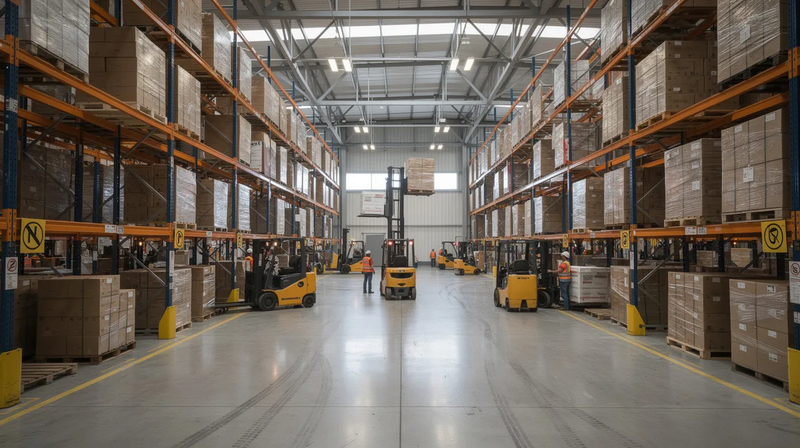
Internal transport equipment underpins day-to-day operations in warehouses, factories, distribution centers, and terminals across Europe. Without reliable material handling systems, goods cannot move efficiently from receiving docks to storage, from storage to production lines, or from picking zones to dispatch.
The equipment types involved include:
| Equipment Type | Typical Application | Capacity Range |
|---|---|---|
| Counterbalance forklifts | General pallet handling | 2–8 tonnes |
| Reach trucks | Narrow-aisle storage | Up to 12–14m height |
| Electric pallet trucks | Short-distance transport | 1–2.5 tonnes |
| Telehandlers | Construction sites, rough terrain | 3–6 tonnes |
| Warehouse racking | Pallet storage | 1–2 tonnes per level |
| Conveyor systems | Automated sorting, transport | 50–200 m/min |
For many mid-sized logistics businesses, this fleet can represent €5–10 million of invested capital and 15–25% of their fixed asset base. The global material handling equipment market size was estimated at USD 213.35 billion in 2021 and is projected to reach USD 350.21 billion by 2030, growing at a CAGR of 5.7% from 2022 to 2030, driven by rapid industrialization and increased demand for automation.
Mobile assets such as forklifts, reach trucks, and tuggers are portable and exportable. They typically retain 40–60% of original value if under 5,000 hours usage and can reach buyers across borders relatively easily.
Fixed infrastructure, like racking systems, mezzanines and conveyors, presents different characteristics. These assets are site-specific, often requiring dismantling, certification, and transport logistics. Their resale dynamics tend to be more regional, with values dropping to 20–40% without pre-planned exit strategies.
Cranes and lifting equipment accounted for over 35.0% of the global revenue in the material handling equipment market in 2021, driven by their wide utilization in industries such as construction and manufacturing.
Why demand for this equipment varies by market
The material handling equipment market is not homogeneous. Demand depends on sector cycles, local regulations, labor costs, and logistics investment levels. Understanding these variations helps companies time their sales and target the right buyer pools.
The global material handling equipment market is projected to grow at a compound annual growth rate (CAGR) of 5.7% from 2022 to 2030, with significant contributions from the e commerce sector due to rising logistics infrastructure.
Key factors shaping regional demand include:
- Sector growth patterns: E-commerce, 3PL expansion, manufacturing shifts
- Emissions regulations: Low-emission zones in Belgian and Dutch cities decrease appetite for older diesel forklifts
- Labor costs: Eastern Europe (€5–10/hour) versus Western Europe (€25+) affects equipment choices
- Infrastructure investment: EU funding increases, Middle East projects
Stricter emission regulations are driving the shift towards electric terminal tractors, forklifts, and battery-powered cranes. This creates a bifurcated market: while local buyers in Western Europe increasingly prefer electric, buyers in Southern or Eastern Europe, or in outdoor and port applications, may still actively seek well-maintained Stage IV diesel forklifts.
Regional markets like Eastern Europe, North Africa, and parts of the Middle East show healthy demand for robust diesel equipment and standard rack systems removed from Western European warehouses. These markets often have less stringent environmental requirements and different operational priorities.
Sector-specific demand drivers
E-commerce growth between 2020 and 2025 has created sustained demand for pallet racking, conveyors, picking systems, and electric pallet trucks. The e-commerce segment accounted for over 20.0% of the global material handling equipment market revenue in 2021, driven by the increased penetration of online shopping platforms and the existence of large online merchants.
E-commerce growth is increasing demand for efficient logistics, requiring more trailers, trucks, and handling equipment. The adoption of automated guided vehicles (AGVs) and other automated material handling tools is increasing among e-commerce giants to enhance delivery precision and reduce labor costs.
Construction and building materials sectors drive demand for telehandlers, rough-terrain forklifts, and heavy-duty industrial trucks. Heavy construction equipment is projected to reach USD 289.30 billion by 2030, growing at a CAGR of 5.2%. Infrastructure investment peaks in 2024–2027 elevate values for 4–6 tonne Merlo or Manitou models, often achieving 50–70% residual value.
The food industry, pharmaceutical industry, and cold chain sectors prefer newer, highly specified equipment. Examples include:
- Narrow-aisle trucks with sensitive guidance systems
- Freezer reach trucks with heated batteries (operating at -25°C)
- Clean room-compliant handling equipment
When companies sell handling equipment from these specialised environments, they often need international buyers to reach niche operators who can use that specification. Pharmaceutical storage requirements and food industry standards create secondary markets that are global rather than regional.
The adoption of Autonomous Mobile Robots (AMRs) and the integration of data analytics are expected to significantly propel the growth of the material handling equipment market, as these technologies enhance productivity and operational efficiency.
Key business moments when companies sell equipment
The timing to sell transport equipment is usually triggered by strategic business events rather than by the age of the asset alone. Common scenarios include:
- Distribution centre closures: Network consolidation or lease expiry
- Network redesigns: Post-merger reallocations
- Automation projects: Upgrading to automated storage and retrieval systems
- Fleet renewal programmes: Electrification transitions
- Capacity adjustments: Downsizing after contract losses
Each scenario creates a different urgency level, buyer profile, and communication strategy. A clear plan for logistics equipment resale can turn what feels like a “cost of restructuring” into an opportunity to free up capital and reduce write-offs.
Example: Selling diesel forklifts during fleet electrification
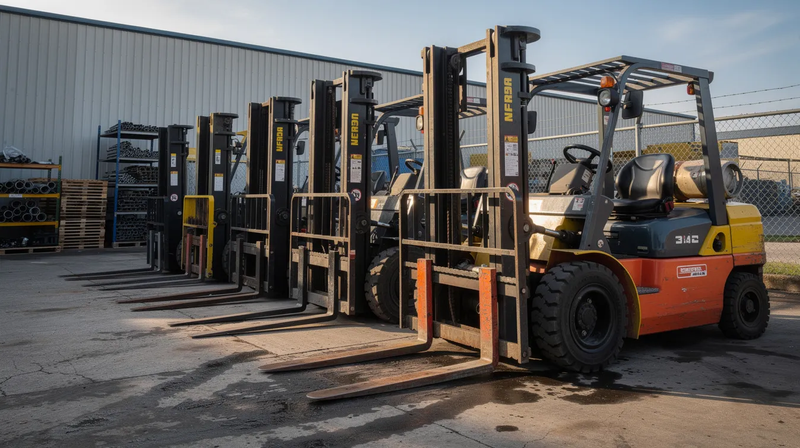
Consider a Belgian 3PL operating 40 diesel forklifts from 2014–2017 models, each with approximately 8,000 operating hours. The company decides to move to a fully electric fleet, such as Toyota Traigo 8FBE units, to comply with customer sustainability requirements and urban emission rules by 2027.
Fleet renewal logistics equipment is planned in three waves. At each wave, 10–15 diesel units become surplus and enter the used forklift sale market. Toyota Material Handling and Toyota Industries Corporation maintain strong brand recognition, meaning well-maintained Toyota units typically command 10–15% premiums over competitors.
Timing challenges arise:
| Timing | Advantage | Risk |
|---|---|---|
| Early sale | Higher prices, less market saturation | Operational disruption if new fleet delayed |
| Late sale | Operational certainty | Lower prices if competitors flood market |
International demand helps here. While local buyers prefer electric, buyers in Southern or Eastern Europe, or in ports and outdoor applications, actively seek well-maintained Stage IV diesel forklifts. Some markets show 20% premiums over depressed local Western prices.
Structured, time-bound sale formats, including industrial equipment auction events such as those organised by Dome Auctions Belgium, can generate competition between buyer groups and support better price discovery warehouse equipment outcomes.
Example: Disposing of warehouse racking after a DC closure
A retail group shutters a 25,000 m² distribution centre in 2025 and needs to remove 12,000 pallet positions of adjustable racking installed around 2016. This storage equipment must be cleared for building handover.
Racking is highly dependent on local building codes, seismic regulations, and layout configurations. The pool of buyers is more regional than for mobile equipment. Potential buyers include:
- Regional logistics operators
- Fit-out contractors
- Integrators serving large scale distribution centers
- Demolition and salvage firms
Timing is tied to the building handover date, which compresses the sale window and increases pressure on pricing. Planning the warehouse equipment sale at least 3–6 months before closure allows time to:
- Survey and document the installation
- Certify load capacities (per EN 15635)
- Market to regional and international buyers
- Coordinate dismantling logistics
When time is limited, companies may accept lower prices from bulk buyers or demolition contractors. Rushed sales to demolishers often recover only €300,000 versus €600,000 achievable with proper planning and marketing to operating buyers.
The complexity of system integration and retrofitting existing warehouses with new automated equipment presents technical challenges, often leading to delays and increased costs for buyers; which is why well-documented, certified racking commands better prices.
Example: Selling conveyors after automation upgrades
A parcel hub or e-commerce fulfilment centre upgrading to a new automated sortation system in 2026 may decommission conveyor lines, spiral conveyors, and sorters installed in 2013–2015. This equipment still has technical life remaining but no longer matches the site’s throughput or data integration needs.
These conveyor systems are often custom-engineered to the building. Potential buyers are typically integrators and engineering firms who can adapt modules to new projects; often outside the original country. Local end-users may lack the engineering capacity to reuse complex systems.
Key factors affecting value:
- Documentation: Layout drawings, control system specs, PLC configurations
- Modularity: Ease of disassembly and reconfiguration
- Condition: Belt wear, motor health, frame integrity
- Compliance: CE marking status for export
International marketing and buyer access prove crucial. Markets in Turkey, North Africa, and parts of the Middle East often show demand for warehouse automation technologies at price points that make used equipment attractive.
Clear documentation significantly increases buyer confidence and achievable prices. Systems with complete drawings and specs may achieve €20–40/meter, while undocumented equipment may attract only half that value.
The importance of timing in logistics equipment sales
Timing combines internal readiness (operational stability, decommissioning plans) with external market conditions (demand, regulations, seasonal patterns).
“End of fiscal year” is rarely the best timing driver. More relevant signals include:
- Capacity shifts in your sector
- Customer contract changes
- Technology inflection points (e.g., cost parity between diesel and electric)
- Regional infrastructure investments
The transport market is expected to witness a compound annual growth rate (CAGR) of 6.3% from 2026 to 2035, suggesting sustained underlying demand that benefits sellers who time their transactions appropriately.
Sellers should avoid overlaps with events that saturate the market:
- Large company closures releasing similar equipment
- OEM trade-in campaigns flooding dealers with used stock
- Seasonal slowdowns in specific sectors
Aligning sale timing with investment cycles, like new warehouse openings in a region or industrial park expansions, can increase active buyer numbers. Polish industrial parks adding 1 million m² create demand; Q2 and early Q4 often see active procurement activity.
The pandemic highlighted the need for material handling organizations to be agile and prepared to pivot operations in response to disruptions in inventory, sourcing, and labor costs. This lesson applies equally to equipment disposition planning.
Balancing operational continuity and sale value
A common tension exists between keeping equipment “just in case” and releasing it to the material handling equipment market while values remain attractive.
Selling heavy equipment before it reaches a point of high repair costs maximizes return on investment. Frequent maintenance costs associated with automated material handling systems can hinder the expansion of the market, as these expenses accumulate; and the same logic applies to holding aging assets.
Operations managers should run realistic utilisation analyses:
- Forklifts operating below 1,000 hours/year may be better monetised through timely sale
- Temporary rental or short-term leasing can bridge gaps during transitions
- Holding costs (maintenance, storage, compliance risks) compound against potential sale value
The risk of waiting for “the perfect moment” is real: depreciation (approximately 10% per year), model obsolescence, and tightening regulations can erode resale value by 20–40% over 12–24 months.
Cross-functional decision-making proves essential. Finance, logistics, and sales teams should jointly agree the optimal sale window based on:
- Cash flow targets
- Contract pipeline visibility
- Operational transition plans
- Supply chain requirements
The role of international buyers
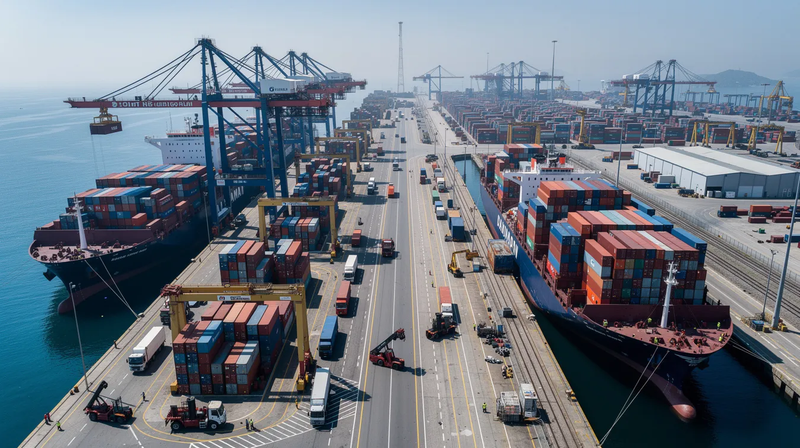
When companies sell transport equipment or sell handling equipment, the best buyer often resides in another country, sometimes outside the EU. International buyers may represent 40–50% of high-value transactions.
Macro trends creating demand for used European equipment include:
- Central/Eastern Europe: Manufacturing shift, growing steel output
- Turkey: Logistics hub development
- North Africa: Infrastructure investments
- Middle East: GCC infrastructure programmes totalling $1 trillion by 2030
- Latin America market: Distribution network expansion
- Asia Pacific: Manufacturing growth in regional markets
International buyers may value older diesel fleets or standard racking higher than local buyers constrained by stricter emissions or safety regimes. A 2014 diesel forklift worth €12,000 locally might fetch €18,000 from an Eastern European buyer.
Reaching these buyers requires more than posting advertisements. It involves:
- Multilingual marketing and documentation
- Trusted intermediaries or auction platforms
- Logistics expertise for cross-border shipment
- Clear export documentation
Structured sales processes, such as those organised by Dome Auctions Belgium, can gather professional buyers from multiple countries into one transparent bidding moment, improving competition and price discovery.
Cross-border considerations for sellers
Sellers must anticipate export-related questions:
| Documentation | Purpose |
|---|---|
| CE marking | Confirms compliance with EU Directive 2006/42/EC |
| Maintenance histories | Demonstrates asset condition |
| T1 transit documents | Required for EU export procedures |
| Technical specifications | Enables buyer evaluation |
High-resolution visuals and detailed condition reports can significantly help in selling transport equipment. Clear, professional photography becomes essential when buyers cannot easily visit the site before bidding.
Providing detailed maintenance records can make units sell 10–15% faster in the transport equipment market. Transparency about equipment repair history builds trust with buyers.
Realistic planning of dismantling, loading, and transport is critical for large assets:
- Racking systems: €2–5 per pallet position for dismantling
- Mezzanines: Specialist contractors required
- Conveyor lines: Module-by-module documentation essential
Sellers should factor in currency considerations, payment security (letters of credit for non-EU transactions), and Incoterms (EXW Belgium versus FOB Antwerp adds 5–10% logistics cost).
Utilizing specialized online platforms for selling transport equipment can enhance visibility and reach targeted buyers. Working with specialised auctioneers or brokers reduces friction around contracts, payments, and export procedures while keeping the seller in control of key commercial decisions.
How price is determined in the handling equipment market
Price in the material handling equipment market results from supply and demand at a specific moment, not simply from book value or original purchase price. The market is highly consolidated, characterized by intense competition among key players such as Toyota Material Handling, KION Group AG, Crown Equipment Corporation, Hyster Yale Materials Handling, and Daifuku Co., Ltd.
Major players in the material handling equipment market are focusing on adopting both organic and inorganic growth strategies, including product launches and mergers and acquisitions, to enhance their market position.
Value drivers for used forklift sale and reach truck sale include:
| Factor | Impact on Value |
|---|---|
| Brand | Toyota commands 10–15% premium |
| Operating hours | Under 5,000 hours = ~60% residual |
| Battery health (electric) | 90%+ health adds 20% |
| Service history | Documented maintenance adds 10–15% |
| Attachments | Clamps, side-shifts add specific value |
For static assets like racking systems and conveyors, configuration, dimensions, compliance certificates, and ease of dismantling heavily influence value. The material handling equipment market is segmented into various types, including cranes and lifting equipment, industrial trucks, continuous handling equipment, and racking and storage equipment.
Competition between professional buyers, like dealers, rental companies and integrators, creates a “price discovery warehouse equipment” process. Multiple bidders reveal the true market level for specific lots at that time.
Real-time tracking and predictive maintenance systems are becoming standard features in the transport equipment industry, meaning equipment with telematics data may demonstrate verifiable usage patterns to buyers.
Market conditions and price volatility
Cyclical factors can raise or depress demand within 6–18 month windows:
- Interest rates: High rates (2023–2025) depressed values 5–10%
- Energy prices: Electricity costs temporarily favour diesel in some regions
- Infrastructure funding: EU investments boost telehandler and construction equipment demand
- Fleet synchronisation: Multiple companies electrifying simultaneously floods diesel market
The COVID-19 pandemic caused a significant decline in the material handling equipment market due to labor shortages and a sharp decrease in demand, particularly during the initial outbreak. Post-COVID-19, major economies experienced economic downturns, leading to reduced revenues and profit margins for material handling equipment manufacturers due to the abrupt closure of manufacturing plants.
Sudden plant closures, major bankruptcies, or OEM buy-back campaigns can inject large volumes of similar assets into regional markets, putting downward pressure on unit prices.
Sellers should benchmark against recent transactions for comparable assets in similar regions. Data from multiple sale channels, such as direct sales, dealer offers and auctions, provides a richer picture of realistic achievable prices.
The transport equipment market is currently transforming due to rapid industrialization and a global shift towards automation and sustainability. The material handling equipment market is expected to grow due to the increasing demand for automated guided vehicles (AGVs) and robotic material handling solutions, particularly in response to the growth of e-commerce and the need for efficient logistics operations.
Strategic considerations for logistics and industrial companies
For business owners, logistics managers, and finance managers anticipating equipment sales over the next 12–36 months, a systematic approach improves outcomes.
High initial investment costs for integrating material handling equipment can be a significant barrier to market growth, particularly for small and medium-sized enterprises (SMEs). Recovering capital from existing assets helps fund these transitions.
The competitive landscape includes major manufacturers and integrators competing for market share, creating demand for warehouse equipment, automated material handling equipment, and material handling solutions across distribution processes.
Strategic investments in automated material handling systems, warehouse automation technologies, and automated storage and retrieval systems are reshaping logistics networks. Companies decommissioning older equipment as part of these upgrades should treat the disposal as strategically as the acquisition.
A practical checklist:
- Map your portfolio: Document all internal transport and warehouse equipment, like forklifts, reach trucks, pallet trucks, telehandlers, tuggers, racking, mezzanines and conveyors, including age and utilisation data
- Align renewal with exit: Every new equipment investment should include a plan for how and when replaced assets will be sold
- Prepare documentation: Technical specs, maintenance records, compliance certificates, photos
- Identify target markets: Sector-specific and geographic buyer pools
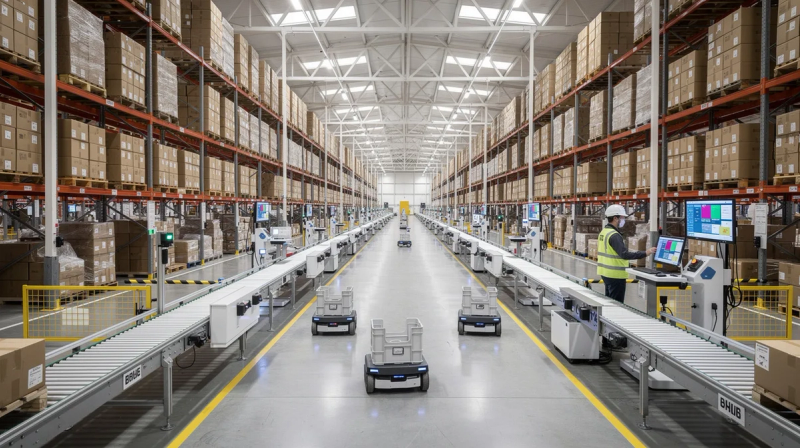
Automated guided vehicles and autonomous mobile robots are transforming warehouse productivity in existing warehouses. Companies upgrading should plan for systematic disposal of displaced handling systems.
Designing a structured sale process
Companies can move from ad-hoc disposals to deliberate processes that group equipment into logical sale events, for example, “Q4 2026 warehouse equipment sale” combining all racks, conveyors, and surplus forklifts from a specific site.
Before the sale, define clear objectives:
- Speed versus price optimisation priorities
- Risk tolerance for pricing outcomes
- Preferred buyer types (end-users, dealers, international)
Channel selection matters:
| Channel | Best For | Characteristics |
|---|---|---|
| Direct outreach | Specialised machines | Known industry contacts |
| Listing platforms | Common models | Broad visibility |
| Curated auctions | Mixed fleets | Competitive bidding |
A centralised communication plan, like landing pages, email campaigns, LinkedIn outreach and sector-specific advertising, can significantly extend market reach, especially across borders. This supports improving supply chain efficiency by connecting sellers with active buyers efficiently.
Report scope and report coverage from industry analysts confirm steady growth in equipment market growth and market expansion. These trends support forecast period projections showing rising demand for secondary market equipment.
Implement a feedback loop: after each sale, review buyer profiles, realised prices, and marketing performance to refine subsequent events. This data helps predict outcomes and optimize storage of future surplus equipment.
Smart manufacturing and technological advancements continue driving warehouse automation investments. Real time inventory tracking and operational efficiency improvements increase demand for modern equipment, and create supply of displaced older systems.
The global market for automated handling equipment shows rapid growth. Technological advances in inventory accuracy and retrieval systems support sustainable logistics operations across distribution centers.
Key players in North America market, Middle East Africa, and global revenue leaders include Crown Equipment Corporation and Kion Group AG alongside regional specialists.
Frequently asked questions
When is the best time in the year to sell transport equipment?
There is no universally “best” calendar month. The optimal timing depends more on sector investment cycles, local project pipelines, and your own operational milestones than on seasons.
In Europe, Q2 and early Q4 often see active demand as companies deploy new projects or finalise investment budgets. However, over-focusing on calendar quarters can make sellers overlook more important market signals.
Monitor nearby warehouse openings, logistics park developments, and OEM campaign schedules. Align your sale with periods when buyers are actively adding capacity, this typically delivers better competition and pricing.
Should we sell older diesel forklifts now or keep them as backup units?
Keeping a small backup pool can be sensible, but large numbers of underused diesel trucks may lose value quickly as low-emission zones and corporate ESG policies expand between 2025 and 2030.
Analyse utilisation data: if a truck runs only a few hundred hours per year and has limited future use in your network, it may be better to release it to markets where demand is still robust.
Compare the cost of keeping the unit (maintenance at €2,000+ per year, storage, compliance risks) versus the capital you could free up by selling into international markets today. Operational costs accumulate against declining asset values.
How far in advance should we plan a warehouse equipment sale after a site closure?
Start planning 6–12 months before the expected closure date, especially for large quantities of racking, mezzanines, and conveyor systems that require dismantling and transport coordination.
This timeframe allows for:
- Technical surveys and load capacity testing
- Safety certification checks
- Documentation of layouts and specifications
- Multi-channel marketing to regional and international buyers
Last-minute sales under time pressure reduce bidder numbers and increase the likelihood of accepting “clearance” prices from a limited buyer pool.
Is it better to sell equipment piece by piece or in larger lots?
The best approach depends on asset type and buyer profile:
- Dealers: Often prefer individual forklifts for retail resale
- Integrators: May favour complete racking or conveyor packages
- Fleet operators: Seek batches of 10+ similar trucks
Mixed strategies work well: group similar units (e.g., a batch of 10 reach trucks) into lots to attract professional buyers while offering very specific or high-value machines individually.
Structured auction events can accommodate both approaches in a single sales window, allowing the market to indicate which configuration delivers the best overall return.
How can digital marketing improve the outcome of an industrial equipment sale?
Targeted digital campaigns reach specialised buyers far beyond a seller’s existing contact network, especially across borders.
Effective tactics include:
- Dedicated landing pages with full specifications
- Search advertising around phrases like “used forklift sale” or “warehouse equipment sale”
- LinkedIn campaigns targeting logistics and operations managers in relevant regions
- Email outreach to known industry contacts and dealer networks
Analytics from these campaigns reveal which markets show the strongest interest, allowing sellers to adapt messaging, timing, and pricing strategies before the sale moment.