
Introduction: Selling industrial machines as part of business transition
Companies rarely sell industrial machines in isolation. Such decisions are typically driven by growth, restructuring, automation, electrification, relocation, or succession when a retirement business owner prepares to hand over the business. This article addresses owners, operations managers, and finance managers in industrial firms who need to sell industrial machines business-wide as part of strategic change.
The central thesis is straightforward: a planned machinery divestment strategy, aligned with business goals and internal stakeholders, delivers better outcomes than ad hoc industrial asset disposal. Examples throughout will include production capacity upgrade machinery, fleet renewal industrial equipment, and asset disposal during restructuring or plant closure.
The structure moves from why machine sales connect to transitions, to when timing matters, and finally how preparation and process shape results.
Why machine sales are linked to business transitions
Industrial machinery sales usually follow strategic decisions rather than spontaneous market opportunities. When a company expands capacity, closes a site, automates a production line, or transfers ownership, equipment changes follow naturally. The sale process becomes part of the transition itself.
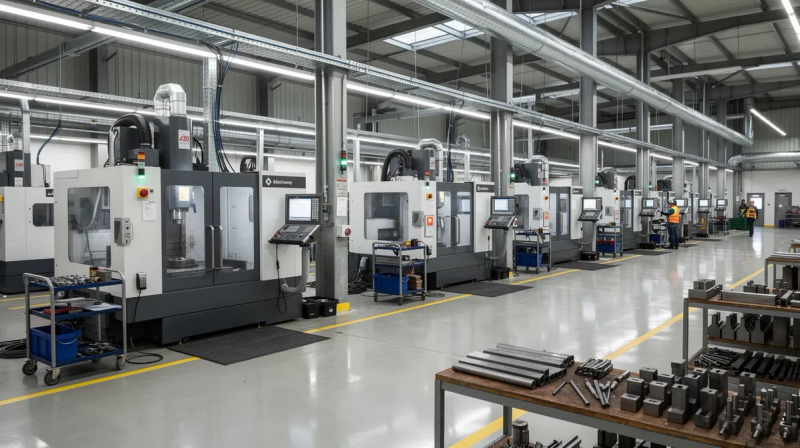
Consider a Belgian metal fabrication company in 2025 upgrading from 2010-era CNC lathes to automated multi-axis machining centres. Selling the older machines releases capital and frees floor space, potentially recovering 40-60% of original cost while enabling a 15-25% productivity gain from the new investment. This illustrates how business growth decisions require both buying and selling equipment to rebalance the asset base.
In restructuring scenarios, such as consolidating two plants into one, industrial asset disposal becomes a direct outcome of footprint optimisation. The same applies to succession cases where heirs or buyers rationalise the machine fleet to fit their own strategy, triggering targeted sales of retirement business owner machinery.
Common trigger moments for selling industrial machines
Specific events create the need to sell equipment, with each trigger setting different priorities for timing, price, and operational efficiency.
Key triggers include:
| Trigger | Priority Focus |
|---|---|
| Production capacity upgrade machinery | Maximise value before technology obsolescence |
| Automation and Industry 4.0 retrofits | Speed of disposal to enable new installations |
| Fleet renewal industrial equipment | ESG compliance and structured transition |
| Relocation or site consolidation | Package sales for turnkey appeal |
| Business restructuring equipment sale | Transparency and regulatory requirements |
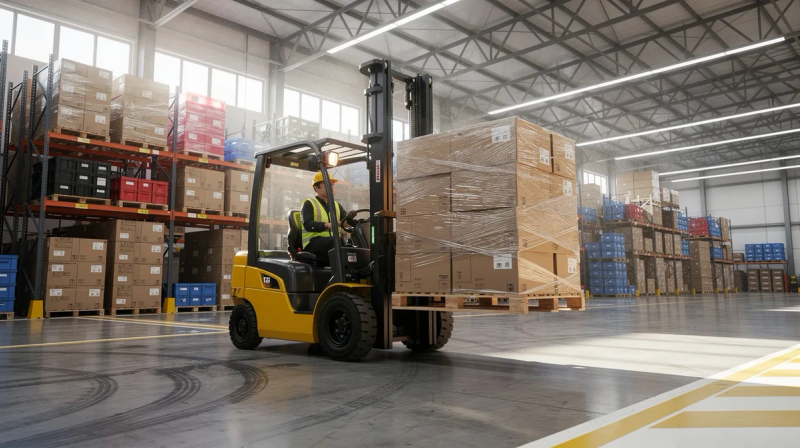
A logistics operator in 2024-2025 replacing 30 diesel forklifts with electric units to meet ESG targets exemplifies structured disposal. Rather than piecemeal sales, a programme approach recovered 50-70% of value while meeting emission targets and serving customer needs for reliable delivery.
Similarly, when a plastics plant decides to close one injection moulding hall, bundling moulding machines, chillers, and dryers for package sale minimises logistics costs and maximises buyer appeal. Each trigger reinforces the need for a documented machinery divestment strategy.
The role of timing in industrial equipment sales
Industrial machine sales timing is shaped by three layers: internal project milestones, market demand for used equipment, and financial or regulatory deadlines.
A company upgrading a production line in Q3 2025 might plan the sale of outgoing machines to close just after the new line stabilises. This balances production risk against favourable used-market prices. Waiting too long reduces value as automation becomes obsolete or stricter emissions rules devalue diesel machines by 15-25% annually. Selling too early threatens delivery commitments to existing customers.
Finance teams may push for rapid response to capital release industrial assets before year-end, improving liquidity ratios. Operations may require more time to manage the transition. Good practice involves aligning these perspectives months in advance.
Platforms offering fixed sale dates, such as scheduled online auctions, help companies choose when to integrate industrial machine sales timing into broader project plans without operational disruption.
Impact on cash flow, balance sheet and production continuity
Selling industrial equipment affects cash flow, the balance sheet, and delivery reliability. Decisions should not rest on estimated sale price alone.
Cash flow effects include:
- One-off inflow from large industrial asset disposal
- Potential bridge financing between sale and new equipment installation
- Implications for bank covenants and debt obligations
A machining company selling three older CNC centres in 2026 to fund a robotic cell illustrates the complexity. If the sale closes before the new cell is commissioned, temporary capacity loss could generate overtime costs or subcontracting expenses of 5-15% of proceeds.
Balance sheet impacts involve removing fixed assets, recognising gains or losses versus book value, and changing depreciation costs. For CFOs planning restructuring, these financial implications require careful management.
Production continuity must be protected through phased decommissioning, interim capacity solutions, or clear customer communication. Late deliveries during transition carry reputational costs that firms typically want to avoid.
Internal alignment and preparation before the sale
Successful sell industrial machines business projects start with clear internal alignment between ownership, management, finance, operations, and maintenance teams.
Management should define objectives and boundaries before engaging the market:
- Maximise price or prioritise speed?
- Minimum residual capacity requirements?
- Environmental constraints or compliance obligations?
Finance departments prepare impact analyses covering expected proceeds, tax consequences, and how funds will be deployed, whether for debt reduction, reinvestment, or working capital.
Operations and maintenance confirm which machines are truly surplus, verify technical condition, and ensure documentation supports a smooth transaction. In formal restructuring or insolvency processes, alignment with legal and advisory stakeholders ensures compliance in the business restructuring equipment sale.
Inventory, valuation and documentation
Preparation depth determines outcomes. Building a complete machinery inventory requires systematic data collection.
Essential inventory elements:
- Asset ID, make, model, year of manufacture
- Operating hours or cycles
- Current use status (core, non-core, obsolete)
- Location and strategic fit for 2024-2026 operations
Valuation combines multiple approaches: recent comparable transactions, expert appraisals, internal net book value, and market checks for specialised assets like heavy equipment or automated warehouses. For items with limited comparables, qualified expertise becomes essential.
Technical and legal documentation, including CE declarations, maintenance histories, modifications, and software licences, reduces buyer uncertainty and supports better offers. Industry benchmarks suggest proper documentation improves conversion rates and can boost proceeds by 15-25%.
Companies preparing for retirement business owner machinery disposals should begin inventory and document consolidation at least 12-18 months before the planned handover. This investment of time and resources pays dividends in the sale outcome.
Integrating machine sales into a broader machinery divestment strategy
A machinery divestment strategy is a medium-term plan defining how the business will rationalise, upgrade, or dispose of industrial assets in line with its strategic roadmap.
Strategy criteria typically include:
- Asset age thresholds
- Energy consumption levels
- Maintenance cost benchmarks
- Digital readiness requirements
- Strategic fit with company operations
A manufacturing group planning between 2024 and 2029 to reduce its footprint from four European plants to three would phase sales of presses, welding robots, and material handling equipment in defined tranches.
Fleet renewal industrial equipment decisions for trucks, forklifts, or loaders can follow a rolling divestment programme with predictable replacement cycles and structured processes every 3-5 years. For machinery companies without internal remarketing expertise, working with structured channels, including auction houses, brokers, or specialised dealers, helps standardise processes and timelines.
Practical examples: Growth, restructuring and succession scenarios
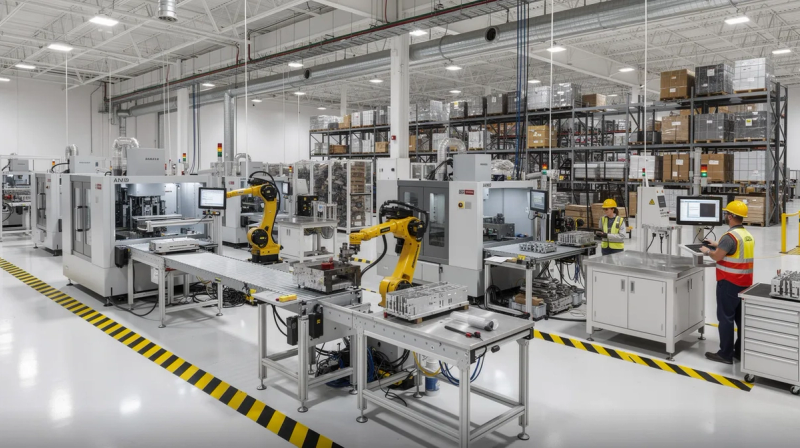
Growth scenario: A food processing company in 2025 installs a new packaging line and sells three 2012-2013 flow-pack machines. The sale is timed after factory acceptance tests while keeping one unit as backup for six months, protecting production continuity while releasing capital for the investment.
Restructuring example: An automotive supplier in 2026 consolidates two stamping plants into one. A package sale of surplus presses, toolroom machines, and quality tools executes via transparent industrial asset disposal with pre-defined auction dates, attracting potential buyers from multiple markets.
Succession case: A family-owned workshop prepares for the owner’s retirement in 2027. Two years earlier, they develop a sell industrial machines business plan with complete inventory and valuation, enabling clean handover to the next generation and structured sale of non-core manual lathes and welding stations.
Electrification example: A construction company between 2024 and 2026 gradually divests older diesel generators and compact machines to align with emission regulations, integrating equipment sales with new financing arrangements for electric replacements.
Working with structured processes and external partners
External partners bring process discipline, market reach, and compliance expertise to industrial machine sales, particularly when timelines are tight or assets diverse.
Main external routes:
| Route | Advantages | Considerations |
|---|---|---|
| Direct sale to end-users | Higher prices possible | Time consuming, limited reach |
| Dealers or brokers | Industry expertise | Commission costs |
| Timed online auctions | Price transparency, speed | Less price control |
Structured auction processes, such as those organised by Dome Auctions Belgium for industrial clients, typically follow defined steps: asset listing, marketing campaign, bidding window, and controlled removal period. This approach supports transparent industrial asset disposal without disrupting company operations.
Even when using external partners, sellers remain responsible for internal preparation: accurate data, realistic expectations, and alignment with production plans. Sales teams at partner organisations can extend market reach to new customers and qualified leads internationally.
Strategic considerations for industrial companies planning equipment sales
Industrial machine sale decisions should be evaluated alongside product strategy, customer commitments, sustainability targets, and long-term capital plans.
Three framing questions:
- Does this asset still support our strategic direction?
- What risk does keeping it create?
- What is the opportunity cost of not redeploying the capital?
In volatile periods with energy price changes and 2024-2028 decarbonisation policies, companies should review their machinery divestment strategy annually. Clear communication with employees and key accounts about the rationale reduces uncertainty during restructuring or succession.
Well-planned industrial asset disposal enables transformation. It allows companies to streamline operations, improve operational efficiency, and reallocate capital to higher-value initiatives. The focus should remain on how disposal supports business goals rather than treating it as an isolated transaction.
Frequently Asked Questions
How far in advance should we plan an industrial machine sale linked to a major project?
Plan at least 6-12 months ahead for straightforward disposals such as selling a small group of machines after a line upgrade. Complex transitions like plant consolidation or retirement business owner machinery programmes require 12-24 months. This lead time allows for complete inventory, realistic valuation, internal alignment, and selection of appropriate sales channels. Early planning is particularly important when relocations, permits, or labour consultations are involved.
Should we sell machines individually or as part of a package?
Individual sales can maximise price for highly sought-after assets like recent 5-axis CNCs. Package sales may be more efficient for complete production lines or lower-value support equipment. Evaluate whether potential buyers would value the integration, such as a complete welding cell with robots and positioners, and whether project timelines favour a single disposal event. Auction processes can accommodate both approaches depending on asset mix and market demand.
What information do buyers of used industrial machines typically expect?
Buyers expect make, model, year, serial number, operating hours, maintenance history, known defects, upgrades, and compliance evidence such as CE marks and safety modifications. Quality visual documentation with clear photos of critical components significantly increases buyer confidence. Transparent disclosure of issues reduces disputes, renegotiations, and delays in removal from site.
How do we handle environmental and safety obligations when disposing of machines?
Sellers remain responsible for compliance on their own site, including safe disconnection, draining fluids where required, and secure lifting procedures up to transfer. Consult national and EU regulations regarding hazardous substances and involve certified providers for decommissioning when relevant. Documentation on prior safety upgrades supports buyer due diligence but does not transfer legal obligations.
Is it better to wait for a stronger used-equipment market before divesting?
Market cycles influence prices, but waiting purely for improvement can be counterproductive if machines are underutilised or blocking modernisation. Calculate the cost of keeping assets, including maintenance, energy, storage, and opportunity cost, against likely proceeds from selling now. For fast-evolving technologies, value erodes quickly, often making earlier, well-planned divestment financially preferable to extended delays.