
Introduction: Why consider international exposure when you sell industrial machines
Most companies first try to sell industrial machines locally. In Belgium or neighbouring EU countries, existing networks often provide the fastest route to a deal. Familiar contacts, shared language, and straightforward logistics make local sales a natural starting point for machinery disposals. However, the world market for industrial machinery is vast, and understanding market share in different regions is crucial for maximizing sales opportunities and staying competitive.
This approach remains valuable. However, adding access to global buyers industrial equipment can create additional sales opportunities without replacing local channels. Consider typical surplus situations: a 2015 5-axis CNC machining centre no longer aligned with production needs, a 2018 palletizing robot cell displaced by automation upgrades, or a fleet of 2019 diesel forklifts after warehouse consolidation.
In each case, local demand may be limited while international machine sales could attract buyers from sectors or regions where such equipment is actively sought. Cross-border machinery sales and industrial equipment export are not alternatives to local efforts—they complement them.
Sellers and buyers in the global equipment market face unique challenges, including adapting to emerging trends and navigating regulatory, logistical, and economic complexities.
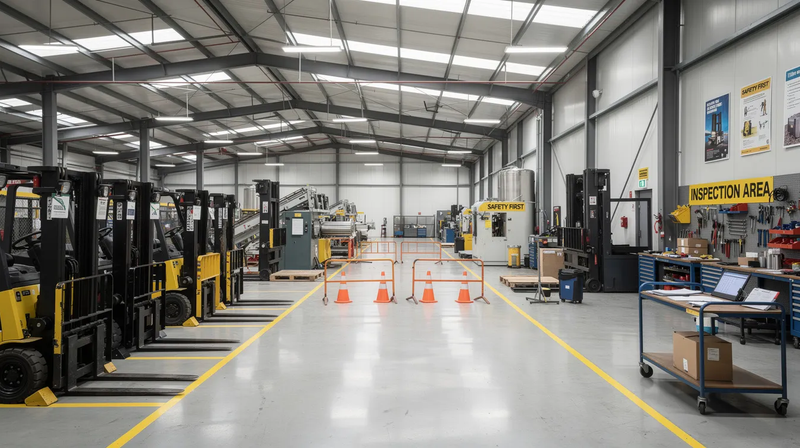
Why machine demand differs by region
Industrial structure varies significantly across countries. Automotive clusters in Germany and Italy drive demand for high-precision metalworking machines, while construction equipment like excavators and wheel loaders sees stronger interest in Eastern Europe amid infrastructure investment. Packaging lines find ready buyers in the Netherlands, where food logistics sectors are well-developed, compared to slower adoption in Southern Europe. Additionally, agriculture and mining are key sectors with significant demand for specialized industrial machinery in certain regions, reflecting the importance of equipment tailored for farming and resource extraction.
Regulatory changes and subsidy schemes also shape international demand industrial machines. EU energy-efficiency subsidies between 2022–2026 prioritised machines with CE marking, Stage V emissions compliance, and EN ISO safety standards. These requirements increased demand for compliant equipment in Western Europe while opening opportunities for non-compliant units in markets with different regulatory frameworks. Innovation in machinery design enables companies to adapt to varying regulatory and sectoral requirements across regions, supporting competitiveness and compliance.
Economic cycles differ by region as well. One country may invest heavily in new factories while another enters a replacement-only phase. This divergence affects who is actively buying used machinery and at what price points. Actionable insights from market research help sellers identify emerging trends and opportunities in different regions.
Sector mix and investment cycles
Regions with strong automotive clusters typically seek high-precision metalworking machines, while food processing sectors look for stainless-steel conveyors and packaging automation. Western Europe experienced strong investment in warehouse automation between 2020–2024, increasing demand for palletizing robot cells and electric forklifts. Central and Eastern Europe, meanwhile, saw infrastructure spending peaks that created demand for diesel forklifts and wheel loaders. Agriculture and mining are also key sectors, each with their own unique investment cycles and demand patterns for industrial machinery; agriculture often requires customized equipment for sustainable farming, while mining relies on specialized machinery to support productivity and technology integration.
These patterns mean a seller in a slow sector can reach buyers in a growth sector abroad. A Belgian company with surplus 2019 forklifts from a consolidation project may find limited local interest but active demand from Polish or Romanian logistics operators expanding their warehouses. Similarly, a 2017 cartoning machine displaced by flexible production shifts may suit a high-volume manufacturer in India or Latin America.
Regulation, standards and technical fit
Different safety norms, voltage standards, and emission rules make machines more suitable for some countries than others. A used gas-powered forklift meeting EU Stage V rules appeals to EU buyers, while older Stage IIIA machines remain attractive in non-EU markets where rules differ. Voltage variances, 400V in Europe versus 480V in North America, also influence where equipment can be deployed efficiently.
International machine sales require attention to technical documentation. Manuals, CE declarations, and maintenance logs reassure foreign buyers about compliance and condition. Clear documentation translated into English, German, or Spanish can significantly increase appeal in the global machinery market.
Local vs international market dynamics
Local and international sales channels work best as complements. Companies can market the same asset to domestic buyers and global buyers simultaneously, creating more options for timing, pricing, and deal structure.
Local sales typically offer faster inspections, lower logistics complexity, and easier negotiations in native language. Existing business relationships reduce risk and simplify payment arrangements. Cross-border machinery sales, by contrast, bring a wider buyer base and more diverse price expectations, though with potentially longer lead times and additional steps such as export documentation and shipping coordination. Navigating these regulatory and logistical challenges can be complex, making it essential to work with a trusted partner who can assist with international transactions and ongoing contracts.
Neither market is inherently better. A 2014 2.5-ton reach truck might sell quickly in Belgium to a familiar buyer, while a 2012 shrink-wrapping line from France may find its best match with a logistics operator in North Africa or a food manufacturer in Africa.
Advantages of maintaining a strong local market focus
Strong local networks allow quicker inspections, simpler payment arrangements, and reduced risk through buyer familiarity. Companies can offer after-sales support, ongoing service contracts, and opportunities to sell additional spare parts or services.
For heavily customised lines, such as integrated packaging and labelling cells built around national regulations, local or regional buyers may capture more value. A Belgian food manufacturer selling a custom packaging line might prioritise Benelux buyers initially, where the equipment’s specifications match local requirements, before opening it to broader international interest.
Additional opportunities from international exposure
Publishing equipment internationally can attract buyers from sectors a seller may not have considered. A printing press might be repurposed for flexible packaging in another country. A construction company downsizing its fleet of 2017 excavators in Spain may find active buyers in Scandinavia, where infrastructure projects peak in 2026–2027.
Industrial equipment export proves particularly useful when national demand is temporarily low due to economic slowdown or sector-specific downturn. Working with structured processes, for example, an industrial auction international format coordinated by Dome Auctions Belgium, enables simultaneous local and international marketing without duplicating effort. Collaborating with an experienced partner for export activities can streamline logistics, ensure compliance, and open access to new markets. Leveraging innovation, such as adapting machinery with Industry 4.0 solutions or automation, allows sellers to meet the evolving needs of buyers and repurpose equipment for new applications.
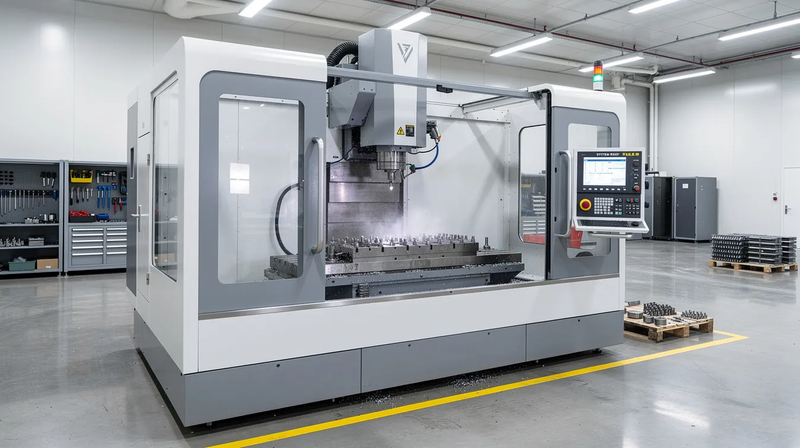
How international exposure expands buyer reach
The core benefit of international exposure is a larger pool of matching buyers for a given machine specification and price range. Multiple buyers competing for a 2016 5-axis CNC machining centre, or a series of 2018 electric forklifts with low hours, creates better conditions for price discovery once equipment is visible to both EU and non-EU markets. Expanding internationally also enables companies to increase their market share and revenue in the global industrial machinery sector, strengthening their position among major industry players.
Broader reach helps particularly in special cases: niche machines, older but well-maintained industrial equipment, or large-volume disposals after factory consolidation. More buyers do not always mean a higher price, but they create more realistic offers and give sellers freedom to choose between price, speed, and contractual terms.
Matching specialised machines with the right users
Very specific machines, such as 6-colour flexographic presses, multi-head CNC routers or high-speed blister packaging lines, may have only a few potential buyers in a domestic market. A Belgian company selling a 2013 thermoforming line might find limited interest locally but gain enquiries from food-packaging producers in Turkey and the Middle East once listed internationally.
International exposure allows such assets to find best-fit users who appreciate the machine’s capabilities. Several months ago, a specialised finishing line found its buyer through international channels after weeks of limited local response. Increased reach can shorten sales cycles and improve overall sale conditions.
Scaling interest for multi-asset or plant-wide disposals
Factory relocation, portfolio optimisation, or post-merger consolidation often requires selling dozens or hundreds of machines within a defined timeframe. International machine sales attract different buyer profiles: end users, dealers, rebuilders, and project buyers who purchase multiple lots across categories.
Running a structured sale event, such as a timed online auction managed by Dome Auctions Belgium, combines local site visits with global online participation. This approach offers operational benefits: better utilisation of deadlines, reduced storage and holding costs, and clearer oversight of interest levels per asset group.
The role of global demand in price formation
Price discovery industrial assets emerges from interactions between supply and demand across all markets where equipment is visible. There is rarely a single correct price for used machinery; rather, there is a range influenced by age, condition, documentation, brand, and buyer location.
Identical 2016 3-axis CNC milling machines may trade at different prices in Belgium, Poland, and Mexico. International exposure reveals this range and helps sellers position expectations realistically. More data points, such as quotations, bids and offers from multiple countries, lead to more informed decision-making on whether to accept, negotiate, or wait. Insights from market trends and data analysis further support accurate price formation and strategic planning, ensuring sellers stay competitive in a dynamic industrial machinery market.
How broader markets clarify realistic value
Listing a machine internationally can uncover hidden demand pockets where buyers value specific options. A 2011 laser cutter with outdated controls might receive modest offers locally but attract a higher bid from a market where retrofit specialists can modernise the system cost-effectively.
Seeing both local and foreign offers helps finance and operations managers understand the true opportunity cost of keeping versus selling an asset. Consider selling a packaging line in 30 days locally at one price versus waiting 90 days for a higher international offer; management must assess that trade-off based on cash flow needs and storage costs.
Auction formats and competitive bidding
Industrial auction international formats gather many buyers into a defined bidding window, increasing transparency and competition. A well-managed auction with local inspection days and online bidding in multiple languages attracts bidders from Europe, the UK, the Middle East, and beyond.
Firms such as Dome Auctions Belgium use structured marketing, asset cataloguing, and defined timelines to help both local and international bidders participate on equal terms. The process advantages, like clear rules, timelines and documentation, support efficient price discovery.
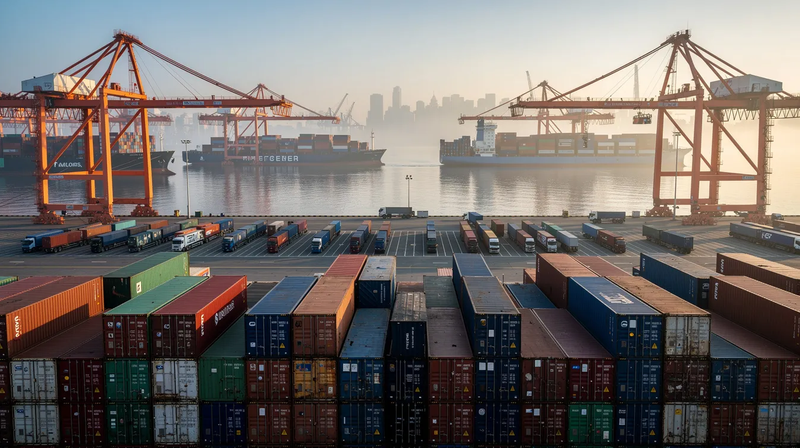
When international sales make sense
Not every asset requires international marketing, but several typical situations benefit strongly from it. These include surplus after process optimisation, closure or relocation of a production site, change in product mix, or technology upgrades driven by automation goals.
| Situation | Example Equipment | International Benefit |
|---|---|---|
| Process optimisation | 2017 cartoning machines | Access markets with higher volume needs |
| Site relocation | CNC turning centres, milling machines | Broader buyer pool during tight timelines |
| Product mix change | Injection moulding machines (glass to PET) | Reach sectors still using older technologies |
| Automation upgrade | Manual packaging lines | Markets with lower automation adoption |
Companies should balance expected price uplift, time constraints, and organisational effort when deciding. Sellers face challenges in timing and resource allocation, as high capital costs and internal constraints such as staff availability and site access can impact feasibility. Monitoring trends in global demand and market dynamics is essential to make informed decisions and maximise returns when you sell industrial machines.
Surplus, underutilised and niche assets
International machine sales prove particularly useful for underutilised machines that are technically sound but misaligned with current production needs. A 2017 high-speed cartoning machine that no longer fits shorter-run production strategies may be ideal for a high-volume producer abroad.
Niche assets, such as specialised testing rigs or sector-specific finishing lines, may find only a handful of buyers worldwide. Limiting these to a local market can delay sale significantly. Preparing such assets requires compiling service history, photos, videos, and technical data sheets suitable for international buyers.
Age, condition and remaining lifetime
Machine age and condition influence the decision to go international. Very old, low-value machines may be best placed locally or processed for parts, while mid-age, well-maintained units can justify broader marketing. Brands like Caterpillar or John Deere in construction, or established CNC manufacturers, retain value across borders.
Ten to fifteen year-old CNC machines with reputable brands and regular maintenance remain attractive for emerging markets. Late-1990s equipment may be more suitable for parts or local resale. A structured sale with clear deadlines ensures older machines are sold before losing too much remaining economic life.
Strategic considerations for industrial companies
Selling industrial machines is both a financial and operational decision that should align with broader asset management strategies. Leveraging actionable insights and innovation, such as automation, Industry 4.0 solutions and sustainable machinery, can help companies achieve strategic goals like increasing revenue and market share. Owners, operations managers, and finance managers benefit from defining internal policies for disposals: thresholds for when to resell versus scrap, and when to use local versus global channels.
Integrating sales of surplus equipment into CAPEX planning, cash flow forecasting, and sustainability goals supports better outcomes. Choosing the right partner is crucial for supporting international sales and ensuring smooth process execution. External partners, such as Dome Auctions Belgium for process execution, can support professional, repeatable disposal workflows.
Building a repeatable process for machine disposals
Key process steps include asset inventory, technical assessment, valuation range, choice of channels, and marketing plan. A consistent data set, like photos, videos, specs, maintenance logs and serial numbers, simplifies both local and international marketing efforts. Leveraging insights from past sales and current market trends helps refine and improve the machine disposal process, ensuring strategies remain effective and aligned with industry developments.
Digital marketing plays a role in promoting sales events. Targeted campaigns, email outreach to existing customers, and SEO-optimised listings focusing on terms like sell industrial machines and global machinery market increase visibility.
Risk management, compliance and documentation
Cross-border machinery sales involve practical risks: payment security, export controls, dual-use regulations, and responsibility for dismantling, loading, and transport. Ensuring compliance and managing documentation present additional challenges, especially given varying international regulations and requirements. Verified buyers, clear terms, and secure payment arrangements reduce exposure.
Key documentation for EU-origin equipment exports includes:
- Commercial invoices with accurate values
- Packing lists with serial numbers
- Export declarations
- Certificates of origin
- CE declarations and maintenance records
Accurate documentation reduces customs delays and increases buyer confidence across all countries.
Frequently asked questions
How early should we start marketing machines we plan to replace?
Companies ideally begin preparing 3–9 months before decommissioning. This timeframe allows gathering documentation, planning site access, and deciding on local versus international channels. Early planning helps avoid rushed decisions, storage costs, and last-minute discounts while allowing enough time to explore international demand industrial machines. A company that started this process 7 months ago or even 1 year ago typically achieves better outcomes than one acting 2 weeks ago.
Do we need to host on-site inspections for international buyers?
On-site inspections remain valuable for high-value equipment, but high-quality photos, videos, and live video calls often reduce the number of visits needed. Structured processes and auction partners can schedule grouped inspection days, so both local and foreign buyers can evaluate machines efficiently before bidding or negotiating. This approach was common 2 years ago and has become more efficient since.
What additional costs should we expect in cross-border machinery sales?
Typical cost categories include dismantling and loading (approximately 5–10% of asset value), transport and insurance (region-dependent, with EU to Middle East shipments ranging €5,000–€20,000 for mid-size equipment), potential customs duties, and documentation support. Cost allocation between seller and buyer is usually defined using Incoterms such as EXW or FOB. Transparency upfront on shipping and related costs reduces later disputes.
Is an auction always better than a negotiated sale?
Auctions work well when there are many assets, strict timelines, or uncertain individual values, as competitive bidding supports price discovery industrial assets. They also help establish realistic market value through competition. Negotiated sales may be preferable for single high-value or strategically sensitive machines where sellers wish to select a specific buyer and negotiate detailed terms around payment, logistics, or ongoing services.
How can smaller industrial companies professionalise their machine sales?
Creating a simple internal process helps establish consistency. Using a central data file for all machines and leveraging digital tools, like CRM systems, email campaigns and SEO-optimised listings, enables reaching both local and global buyers industrial equipment. Working with specialised partners, such as Dome Auctions Belgium for organised sale events, helps smaller firms access capabilities similar to large industrial groups. This integration of technologies and strategies supports growth in the equipment market without requiring extensive internal resources.