
When a Belgian or Dutch manufacturing company decides to sell industrial machinery, the first instinct is often to look at the local market. However, market data and transaction practice show that buyers who attribute the highest value to used production equipment are frequently located beyond national borders. This article explores the underlying market logic, sector-specific demand patterns and the price discovery mechanism that often makes international sales more advantageous.
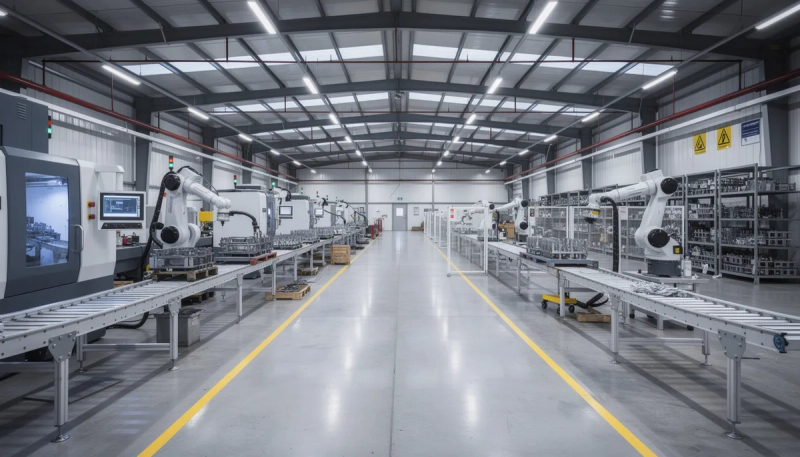
Why selling industrial machinery locally is often too limited
Many SMEs initially look for buyers within their own region when they want to divest machinery. A metalworking company in Limburg selling a 2014 Mazak CNC machine or a logistics firm offering a 2017 Jungheinrich forklift will first contact familiar relations or list the equipment on local platforms.
This approach is understandable, but it faces structural limitations. The local market for niche machinery simply does not contain enough potential buyers to enable optimal price formation.
The dynamics of a “too small pond” manifest in several ways:
- Limited number of relevant buyers:For injection moulding machines above 500 tons, five-axis machining centres or used welding robots from 2010–2015, there are often only a handful of companies in the Benelux with immediate demand.
- Correlated economic cycles:When Belgian construction slowed in 2023, local demand for used cranes, excavators and scissor lifts declined simultaneously.
- Regional sector concentration:A printing company in Antwerp selling a Heidelberg offset press competes with other sellers in the same sector undergoing the same cycle.
- Price pressure due to limited competition:With only one or two local interested parties, no competitive bidding environment emerges, leading to heavy price negotiations.
- Unqualified inquiries:Local listings frequently attract buyers lacking the financial resources or technical knowledge to complete the transaction.
For example, a metal processor in Limburg selling two Trumpf laser cutting machines may find only five to ten potential local buyers. Most either already operate similar equipment or are investing in newer technology. The result can be a sales process lasting months, ending at a price 15–20% below potential market value.
Market logic: How international demand works for industrial machinery
Demand for used machinery differs fundamentally by country and economic development level. While Western European companies invest in Industry 4.0 and dispose of older machines, buyers in other regions actively seek reliable, proven technology.
Shifting demand based on development stage
Western EU countries such as Belgium, the Netherlands and Germany renew their machinery fleets faster than many other regions. Meanwhile, companies in Eastern Europe, Turkey and North Africa (2024–2026) actively seek solid used machinery from 2005–2015. These machines may be fiscally depreciated in Western Europe but remain technically operational.
Product lifecycle differences per market
A three-axis CNC machining centre from 2010 may have reached the end of its economic life in Flanders from a book value perspective. In Romania, Morocco or India, however, the same machine may still produce profitably for another ten years due to lower labour costs, different depreciation regimes and less stringent automation requirements.
Macro trends by sector
| Machine category | Demand driver | Strong demand markets 2024–2026 |
|---|---|---|
| Construction equipment | Infrastructure investments | Eastern Europe, Africa, Middle East |
| Packaging lines | E-commerce growth | Poland, Czech Republic, Spain |
| Food processing machinery | Emerging market consumption | North Africa, Latin America |
| CNC metalworking | Automotive & engineering | Turkey, India, Central Europe |
Concrete Example
A Belgian food producer replaces a glass jar packaging line with an automated system. In Belgium, the market for canned goods packaging is stable or declining. In Poland and the Czech Republic, however, canned goods production grows 5–8% annually due to export expansion. Demand for this equipment type is substantially higher there.
International demand is not random. By combining sector and country data (production statistics, investment figures, machinery import/export flows), it becomes predictable which markets show the strongest interest in specific machinery categories.
Sector-specific demand: Who seeks which machines, where and when?
Each industrial machinery segment has its own international buyer profile.
Metalworking
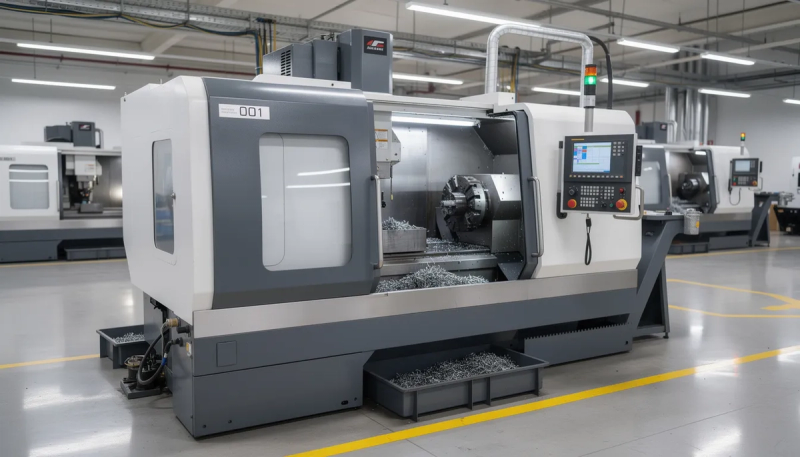
Used CNC lathes, milling machines and laser cutters from brands such as Trumpf, Amada, Mazak and DMG Mori are in strong demand in Poland, the Czech Republic, Turkey and India. The €40,000–€200,000 range is particularly active, as new machines in this segment are often too capital-intensive. Machines from 2012–2018 with documented maintenance history often sell within four to eight weeks.
Plastics and rubber
Used Engel or Arburg injection moulding machines (2008–2016) frequently find buyers in Southern Europe, North Africa and Latin America. A >500-ton machine can double production capacity for a Moroccan plastics producer at a fraction of new cost.
Construction and logistics
Forklifts, telehandlers and excavators from Western Europe are structurally exported to Eastern Europe, Africa and the Middle East. Robust used machines are valued for reliability and spare parts availability.
Food and packaging
Used filling lines, labelling systems and shrink wrappers find demand in countries where food exports are expanding.
Thinking inregional sector clustersis more effective than focusing solely on countries:
- Automotive production: Slovakia, Czech Republic, Hungary
- Logistics: Netherlands, Germany, Poland
- Agrofood: Poland, Spain, North Africa
- Metalworking: Turkey, India, Central Europe
Price discovery: Why international markets often lead to better outcomes
The final selling price of a machine is not objective. Price results from competition among buyers with different valuations.
Reference pricing and transparency
International auctions and marketplaces provide transaction history visibility. A 2015 Linde forklift or 2012 Fanuc welding robot has traceable benchmarks, helping set realistic expectations.
Regional arbitrage
The same machine may have lower residual value in Germany due to stricter environmental norms, yet command higher valuation in Hungary or Egypt. Access to multiple markets allows sellers to benefit from these differences.
Competitive bidding environment
With multiple international bidders, competitive dynamics emerge. In one scenario, a Belgian SME sold a 2009 press brake locally for offers around €18,000. Through international exposure, final bidding reached €27,000.
Research indicates competitive international price formation can generate 20–30% higher results compared to local negotiated sales, particularly in the €50,000–€500,000 range.
Risks and considerations in international sales
International sales add complexity:
- Technical documentation (English minimum)
- CE marking and export compliance
- Transport logistics (Incoterms 2020)
- Insurance and dismantling
- Payment security (letters of credit for high-value deals)
- Longer lead times (2–6 months for complex installations)
A structured approach mitigates these risks.
Adapting your sales strategy
The choice is not binary: local or international. It is about systematically identifying the best market per machine.
Steps include:
- Structured inventory overview
- Market analysis per machine category
- Segmentation between standard vs. specialised equipment
- Timing aligned with global investment cycles
- Internal alignment across production, finance and sales
Digital marketing and data in international machinery sales
International sales are increasingly data-driven:
- Multilingual landing pages
- SEO on machine types and brands
- Targeted lead generation campaigns
- CRM-based transaction history
- Marketing automation flows
- Case-based educational content
Conclusion
The international market for industrial machinery offers structural advantages for sellers willing to look beyond their own region. This is not a matter of preference, but of market logic: the right buyer for your machine is often located where demand is strongest and valuation aligns best with the remaining technical lifespan of the equipment.
A systematic approach that combines internal business objectives with external market data leads to better outcomes, whether the final buyer is in Belgium or on the other side of the world. Relying on data and professional support helps maximise value and gives your machinery a second productive life.
FAQ on the international sale of industrial machinery
When does it make sense to sell a machine only locally?
Local sales can be appropriate for very low-value assets (below €5,000), machines with a high risk of transport damage (such as large, old cast components), or equipment that is strongly tied to local infrastructure—for example, custom installations connected to building-specific facilities.
Legal restrictions, such as licensing requirements or specific safety regulations, may also justify limiting the sale to the domestic market. In such cases, the transaction costs and export complexity may outweigh the potential price advantage. If you are unsure about the best approach for your specific situation, consulting experts is advisable.
How do I determine a realistic asking price for a used machine?
A guideline price should ideally be based on a combination of factors: age, brand, technical condition, maintenance history, productivity, and recent transaction data for comparable machines. Review results from international auctions between 2021–2024, price databases, and asking prices on major B2B platforms.
Keep in mind that asking prices do not guarantee achieved prices. It is often more effective to define a price range (minimum–maximum) rather than a fixed expectation. An offer from a dealer or appraiser can serve as a reference point, but may not fully reflect international market value. Consulting specialised parties can provide a more accurate market assessment.
How should I handle inspections and testing for international buyers?
Serious international buyers often request an independent inspection or a remote video inspection before submitting a final bid. Standard procedures should include load tests, checklists for critical components (such as spindle hours, control systems and hydraulics), and a structured photo and video report.
Clear and transparent documentation reduces the risk of later disputes regarding machine condition and liability. Upload all relevant documentation to a shared platform to ensure easy access for buyers. This streamlines the process and minimises follow-up questions.
What is a realistic timeline for selling industrial machinery?
Standard individual machines (forklifts, conventional CNC machines) often sell within 4–12 weeks. Highly specialised equipment or complete production lines may require 6–12 months. Pricing strategy, documentation quality, economic conditions in target markets, and chosen sales channels significantly influence timing.
Planning for dismantling, transport and potential structural adjustments adds time beyond the actual sales process. Establish a realistic timeline and anticipate possible delays. For complex installations, coordination between all internal departments is essential.
Do I always have to choose between auction and private sale?
Both models can coexist. Auctions are effective for rapid price discovery when selling multiple machines simultaneously. Private sales through a dealer or direct purchase by a strategic partner may be more suitable for highly specialised or high-value assets.
Some companies adopt hybrid approaches in 2024–2025: an initial period of targeted private negotiations in specific countries, followed by an auction for remaining machines. The optimal choice depends on time pressure, number of assets, internal capacity and risk tolerance regarding price variation. Maintaining multiple options provides flexibility in sales strategy.