
Idle CNC machining centres, presses, forklifts, and production lines sitting unused in your facilities represent more than wasted floor space. In 2024–2025, these assets create a measurable financial and strategic drag on your operations.
The industrial machinery market continues to grow, valued at approximately USD 844 billion in 2026 and projected to reach USD 1.8 trillion by 2035. This growth, driven by automation and smart manufacturing, means buyer demand exists—but only if you reach the market while your equipment retains value.
- Holding costs accumulate quietly: Depreciation, insurance premiums, floor space occupation, and maintenance for machines like a 2015 CNC machining centre or 2012 injection moulding machine continue whether the equipment runs or not. Every month of delay reduces your potential return.
- Opportunity cost is real: Capital locked in unused assets cannot fund new robotics, energy-efficient lines, or digitalisation projects. Releasing this value sooner accelerates your investment in competitive capabilities.
- Passive listing creates uncertainty: Waiting for a buyer on generic online marketplaces lacks deadlines and competitive pressure. A structured sales process with defined timelines and international reach attracts serious buyers who are ready to act.
Three core sales strategies for industrial machines (and when to use each)
There is no one-size-fits-all method for selling industrial equipment. The optimal strategy depends on volume, urgency, machine type (CNC, HVAC, food processing, packaging, metalworking), and the current market cycle.
- Private negotiated salessuit unique or high-ticket machines—for example, a 2020 5-axis CNC valued above €250,000—where confidentiality and control over the buyer selection are key priorities.
- Structured B2B auctionsvia Dome Auctions work best for multi-asset disposals: full plant closures, complete production lines, or situations involving 10+ machines requiring rapid, competitive sale with transparent pricing.
- Hybrid approachescombine both methods: anchor machines sold privately to maximise price, while general shop equipment, stock, and support tools clear through one or more auction events.
- Concrete examples exist: A Belgian metalworks upgrading a production line might sell its flagship CNC privately while auctioning older presses and tooling. A logistics hub closing a 5,000 m² warehouse might auction all racking, conveyors, and handling equipment in a single timed event.
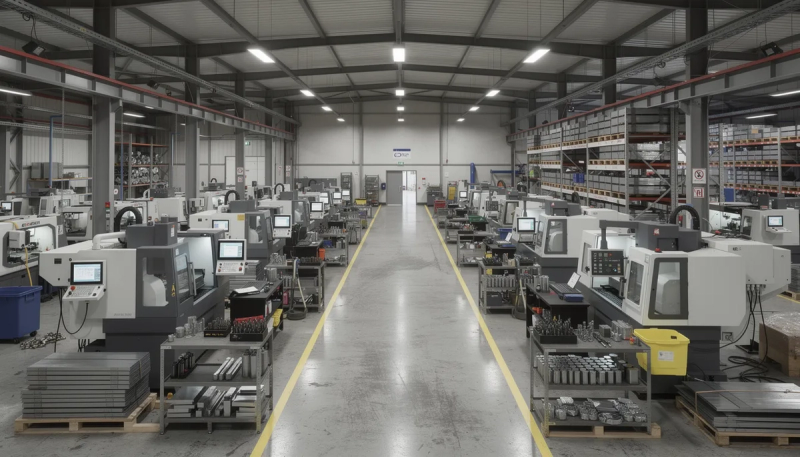
Strategy 1: Private negotiated sales for high-value or sensitive assets
Private sales make sense when you have a single top-end CNC, a pharma line requiring strict documentation, or sensitive machines in defence-adjacent sectors where discretion matters.
- Define target buyers proactively: Rather than waiting for random inquiries, identify potential buyers across Europe—OEMs, tier-1 suppliers, approved refurbishers—and approach them directly with your offering.
- Prepare a detailed technical dossier: Include year of manufacture, operating hours, service history, CE certificates, PLC versions, and any retrofits completed between 2018–2024. Complete documentation reduces buyer hesitation.
- Timing affects outcomes: Private sales typically take longer than auctions but can yield a premium when aligned with trade shows, sector investment cycles, or specific buyer needs. A deal struck during peak purchasing windows often outperforms rushed transactions.
Strategy 2: Structured industrial auctions with Dome Auctions
Dome Auctionsspecialises in online and hybrid B2B auctions for used industrial machines across Belgium and Europe. Their timed auctions typically run over 10–21 days, creating urgency while allowing sufficient time for international buyer participation.
- When auctions work best: Factory closures, relocations, and portfolio clean-ups involving 20–500 assets—presses, forklifts, compressors, tooling, racking—benefit from the competitive dynamics and fixed timelines that auctions provide.
- Key advantages include: Competitive bidding that enables true price discovery, fixed timelines that provide certainty, transparent process documentation, access to professional buyers from 30+ countries, and faster cash recovery compared to waiting for private sale opportunities.
- Results can exceed expectations: In a 2023 woodworking plant liquidation, structured auction processes achieved results 15–20% above internal valuation expectations—demonstrating that competition among qualified buyers consistently produces better outcomes than negotiating with a single party.
Strategy 3: Hybrid disposal plans for complex situations
For groups with multi-site footprints or mixed asset quality, hybrid strategies represent the practical norm rather than the exception.
- Segment your assets intelligently: Premium machines with strong individual value go through private sale channels. Commodity machines, support equipment (pallet trucks, shelving, small tools), and general inventory clear efficiently through Dome Auctions events.
- Phase your timeline: Allocate the first 60–90 days for key private deals on high-value items. Then schedule one or more auction dates to clear remaining assets before lease end or site handover deadlines.
- Visualise your roadmap: A typical 6-month disposal timeline moves from initial decision and asset audit (month 1) through private sale negotiations (months 2–3), auction preparation and marketing (months 3–4), auction execution (month 5), and final collection and site clearance (month 6).
How Dome Auctions’ B2B auction process works (step by step)
Dome Auctionsis specialised in structured industrial auctions, operating across Belgium and wider Europe. Their process is designed to maximise seller value while maintaining transparency at every stage.
The auction process follows clear phases: evaluation, cataloguing, marketing, bidding, and payment with logistics coordination. Throughout, sellers access dashboards showing interest, bids, and realised market prices in real time.
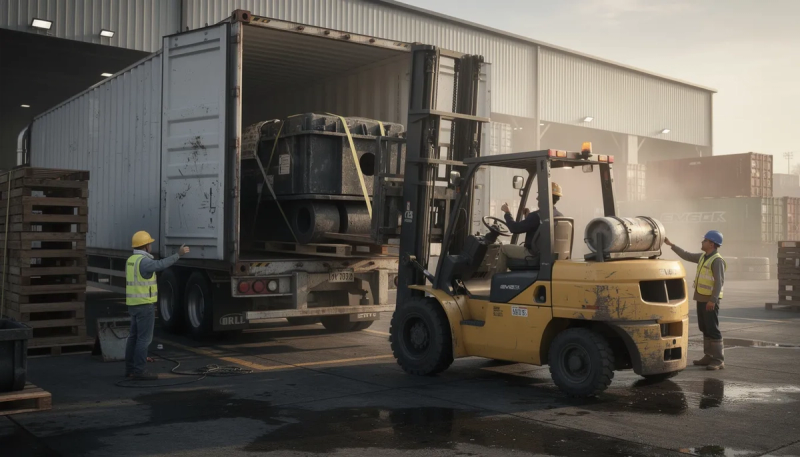
1. Asset audit, valuation and sales scenario
Dome Auctions begins with onsite or remote audits, typically conducted 4–12 weeks before the desired sale date, providing sufficient time for thorough preparation.
- Comprehensive inventorying: Every machine is listed with make, model, serial number, year (e.g. 2011–2019), operating hours, condition notes, and location across your sites or warehouses.
- Market-based appraisal: Assets are valued using recent comparable auction results from 2021–2024 combined with current buyer demand analysis in sectors like metalworking, food processing, packaging, and logistics.
- Scenario proposals: Dome Auctions presents options—single global auction, multiple themed auctions, or combinations with reserved prices on key items—tailored to your specific situation and objectives.
2. Cataloguing, photography and data preparation
Professional presentation can shift final price by 10–25% on used machines. Investing in proper cataloguing is not cosmetic—it directly affects competitive bidding and buyer confidence.
- Cleaning and staging: Machines should be presentable, accessible, and safe for inspection and photography. This modest effort signals professional management to prospective bidders.
- High-quality catalogue entries: Each lot includes high-resolution photos, videos of machines running where possible, and multi-language descriptions (EN/FR/NL/DE) to reach international buyers effectively.
- Documentation collection: Manuals, maintenance logs, CE declarations, and retrofit reports from 2018–2023 accompany each listing. Better data reduces buyer risk perception and encourages more aggressive bidding.
- Reduce buyer uncertainty: When buyers have complete information, they bid with confidence. Incomplete listings attract conservative offers or no bids at all.
3. International marketing and buyer activation
Dome Auctions maintains an international database of professional buyers.
- Segmented email campaigns: Registered buyers receive notifications filtered by sector interest—metal, woodworking, plastics, food, logistics, construction—ensuring relevant audiences see your offerings.
- Digital promotion: SEO-optimised landing pages, PPC campaigns targeting specific countries (including South Korea and other areas with strong manufacturing sectors), and LinkedIn ads reaching operations and procurement roles expand your potential bidder pool.
- Retargeting and automation: Marketing automation workflows remind interested buyers before bid deadlines, capturing those who viewed but did not immediately register.
- Cross-border results: It is common to see an Italian buyer winning a Belgian press or a German buyer acquiring a French CNC—demonstrating that international marketing directly affects final prices and competition.
4. Auction window, bidding and price protection
Typical online auction windows run 7–21 days with a defined closing date. Anti-sniping mechanisms (soft-close extensions) ensure fair competition and maximize final prices.
| Auction Format | Best For | Typical Duration |
|---|---|---|
| Timed online auction | Most multi-asset disposals | 7–21 days |
| Live webcast event | Large plant closures | Single day with preview period |
| Sealed bids | Sensitive or high-value single assets | 14–30 days |
- Reserve prices and lot groupings: Dome Auctions and the seller agree on protective floors and logical bundles—for example, an entire production line versus separate components—balancing price protection with market appeal.
- Real-time monitoring: Sellers access dashboards showing registrations, watched lots, and live bids, enabling informed decisions throughout the auction window.
- Transparency and compliance: Clear documentation of the entire process supports corporate governance requirements and satisfies auditors reviewing the deal structure.
5. Payment, collection and site clearance
Quick, secure cash collection and minimal operational disruption are priorities once the auction closes.
- Payment security: Invoicing follows immediately, with escrow-like processes ensuring funds are received before machinery removal. This protects your money and eliminates collection risk.
- Organised removals: Collection typically occurs over 1–4 weeks, with clear site rules and coordination with your HSE and facility teams to manage logistics safely.
- Comprehensive reporting: Lot-by-lot results, buyer locations, and performance versus initial estimates provide the data your finance team and board need for internal reporting.
Preparing your industrial machines for sale in 2026
Preparation is a quick win. Modest effort before sale can materially boost revenue and reduce post-sale disputes with buyers.
- Technical preparation: Basic servicing ensures machines start, run, and show no obvious faults during inspection. A machine that operates during viewing attracts higher bids than one that sits cold.
- Documentation preparation: Collect certificates, service contracts, records of upgrades (e.g. a 2019 control retrofit), and operator manuals. This package tells buyers the machine has been professionally managed.
- Digital assets: Prepare PLC backups, parameter lists, and clarify how software licences transfer. Buyers increasingly expect clarity on these items before bidding.
- Practical checklist: Four to eight weeks before listing or auction, assign internal resources to complete staging, documentation gathering, and final operational checks.
Visual, safety and compliance checks
Safety and compliance directly affect buyer confidence and final price. Neglecting these basics creates unnecessary risk and depresses bidding.
- Guards and emergency stops: Ensure all safety guards, emergency stops, and warning signage are intact and visible, particularly on presses, saws, and conveyors.
- Clean environment: Remove waste, offcuts, and personal tools so photos show a professional environment. First impressions matter in online presentations.
- CE markings and conformity: Verify CE markings, conformity documents, and any sector-specific standards (e.g. food-grade stainless documentation) are present and accurate.
- International appeal: Well-presented machines attract more international bids at Dome Auctions. Buyers bidding remotely rely entirely on catalogue quality to assess value.
Information buyers expect before they bid
Professional buyers in 2024 expect data, not vague descriptions. Providing comprehensive information is not optional—it is the baseline expectation.
| Information Category | Details to Include |
|---|---|
| Key specifications | Power requirements, capacity, working range, speed, supported materials, software versions |
| Usage indicators | Hours logged, number of shifts, typical workload, last full overhaul dates |
| Installation notes | Weight, footprint, required dismantling, loading constraints (e.g. 5T overhead crane needed) |
| Documentation | Manuals, maintenance logs, CE declarations, retrofit reports |
Internal teams can usually find this information in maintenance logs, ERP systems, and OEM nameplates on the machine itself.
Typical assets and sectors that benefit from structured sales
Structured strategies and B2B industrial auctions work across many sectors, from metalworking to logistics and food processing. The method adapts to your specific industry context.
- Metal and machining: CNC lathes, milling centres, laser cutters, bending machines, and heavy equipment sell well via a mix of private sales for premium items and Dome Auctions for commodity machines.
- Packaging and printing: Form-fill-seal lines, labellers, shrink tunnels, offset presses, and digital presses often group effectively in themed auctions attracting specialist buyers.
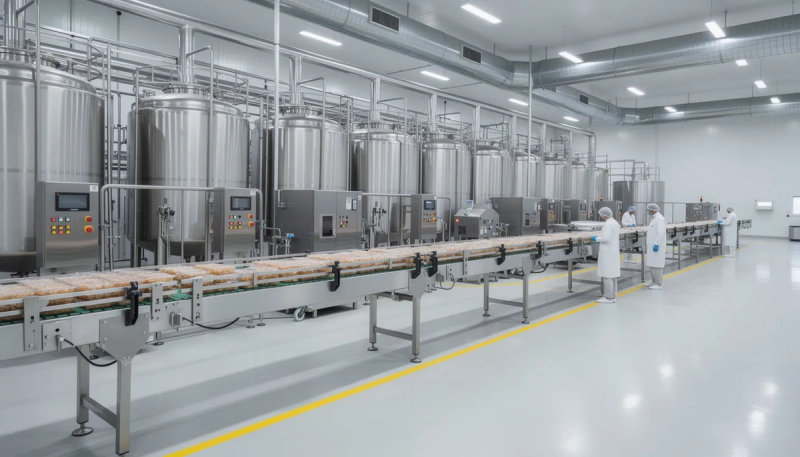
- Food and beverage: Stainless tanks, bottling lines, ovens, and mixers attract strong export interest from Eastern Europe, North Africa, and Asia when properly marketed internationally.
- Warehousing and logistics: Racking systems, conveyors, AGVs, forklifts, and reach trucks clear efficiently in timed auctions scheduled before lease end dates.
Case-style examples to include
These anonymised examples illustrate the practical application of structured disposal strategies.
- 2023 Belgian metal shop: Sold 12 machines—3 via private negotiation for premium prices, 9 via Dome Auctions in a timed event. Combined approach achieved above-book value and cleared the inventory within 90 days.
- 2022 logistics centre closure: Racking and handling equipment sold in one 14-day online auction to buyers from 5+ countries. The seller received payment before final site clearance deadline.
- 2021–2024 food-processing retool: Aging production lines sold to buyers in Eastern Europe and North Africa through combined marketing and auctions. Proceeds directly funded automation upgrades for the new facility.
These examples demonstrate both financial outcomes (price uplift, speed) and strategic ones (freeing space for new lines, funding building investments).
Working with Dome Auctions: How to start
The entry point is typically an initial consultation where Dome Auctions review your machine list, timing constraints, and business objectives.
| Step | Activity | Typical Timeline |
|---|---|---|
| 1 | Quick assessment of asset list, photos, and key deadlines | 1–2 weeks |
| 2 | Proposal of tailored strategy with indicative calendars | 2–3 weeks |
| 3 | Alignment with finance and operations teams | 1–2 weeks |
| 4 | Execution of agreed plan | 6–16 weeks |
- Step 1: A quick assessment (often remote) of your asset list, photos, and key deadlines such as lease end or production shutdown date establishes the baseline.
- Step 2: Dome Auctions proposes a tailored strategy—private sales, one or more auctions, or a hybrid plan—including indicative calendars and marketing approach.
- Step 3: Alignment with your finance and operations teams defines roles, responsibilities, and KPIs (recovery rate, timeline, buyer reach).
FAQ about selling industrial machines and using auctions
This section addresses practical questions not fully covered above, focusing on European context and typical seller concerns.
How far in advance should we plan a sale or auction of our industrial machines?
For plant closures or major reorganisations, planning ideally starts 4–9 months before your target date. Smaller disposals involving a handful of machines can often be organised within 6–10 weeks. More time allows better marketing, cross-border buyer outreach, and orderly site clearance without production disruption. Dome Auctions can handle urgent cases, but early planning usually translates into better financial outcomes.
What happens if some machines do not reach the reserve price at auction?
Reserve prices are agreed in advance, and unsold lots can then be re-marketed, offered in a follow-up auction, or switched to negotiated private sale. Dome Auctions reviews bidder feedback to adjust positioning, pricing, or target markets if a second attempt is needed. The goal is to protect your minimum acceptable value while still aiming to maximise competition and final prices.
Can we sell machines that are still installed and in production?
Yes, many buyers are comfortable bidding on machines that remain installed, as long as there is a clear timetable for disconnection and removal. Realistic downtime planning, safety procedures, and cut-off dates agreed between seller, buyer, and Dome Auctions are essential. Showing machines under power and in operation before shutdown can actually increase buyer confidence and achieve higher prices.
What about data, software licences and control systems on our machines?
PLC programs, CNC parameters, and SCADA licences need explicit consideration in sales terms. The seller must clarify what transfers (software, backups, user accounts) and what remains proprietary, especially in regulated sectors.
Are there tax or accounting implications when selling older industrial equipment?
Selling machines affects your fixed asset register, depreciation schedules, and potentially capital gains or losses. Involving your finance and tax advisors early helps plan the timing and structure of sales in Belgium or other EU jurisdictions. Dome Auctions provides detailed sale reports to support your accounting entries and audits, though this does not replace formal tax advice from qualified professionals.