
For many entrepreneurs in manufacturing, construction, logistics or metalworking, deciding when to sell machinery is not straightforward. It is not a quick decision, but one that can influence financial resources, operational capacity and competitive positioning for years to come.
A machine is more than a piece of steel on the shop floor. It is a financial, operational and strategic asset that represents capital, occupies space and requires maintenance. At the same time, it may still hold significant value on the secondary market for another user. The timing of a sale largely determines how much of that value your company ultimately captures.
This article explores the context and time dynamics surrounding the sale of industrial machinery. Not as a step-by-step checklist, but as an examination of the factors that shape the right moment to sell, from accounting logic to market windows and from internal signals to broader strategic scenarios.
The hidden balance sheet: Your machinery as capital reservoir
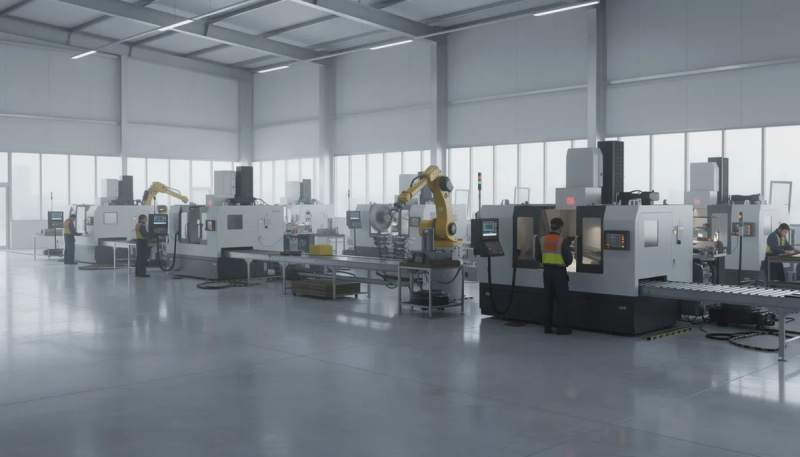
Many companies in Belgium and across Europe have built their machinery fleet over fifteen to twenty years. Purchases, mergers, acquisitions and project-based investments have resulted in collections of lathes, milling machines, forklifts, excavators and production systems, each following its own lifecycle.
On the balance sheet, fully depreciated assets are often considered “old” operationally, yet financially they may still hold considerable market value. A CNC machine with a book value of zero can still generate a substantial sales price. These are often referred to as “hidden reserves”: value not visible in financial statements but convertible into liquidity upon sale.
Consider a forklift used only occasionally since 2018, or an excavator barely deployed after a major project completion. These machines tie up capital and space, while for another company they may represent immediate production capacity. Recognising such assets is the first step in evaluating timing.
When does a machine become 'strategically old'?
“Old” is not defined solely by age or operating hours. A machine becomes strategically obsolete when it no longer aligns with the company’s future direction.
This turning point may occur during:
- Automation initiatives
- Modernisation of production lines
- Scaling production capacity
- Fleet rejuvenation programmes
- Electrification of fleets (phasing out diesel equipment)
- Harmonisation of machinery types and brands
- Entrepreneur retirement or succession planning
- Corporate restructuring or relocation
A metalworking company transitioning to automated welding cells may still operate conventional welding stations. Strategically, however, exploring sales scenarios early prevents machines from sitting idle once new lines become operational.
It is not the calendar that defines obsolescence, but your strategic roadmap.
Seasonal cycles, projects and market fluctuations
Accounting periods represent only one layer of timing. Seasonal demand, project cycles and macroeconomic shifts also matter.
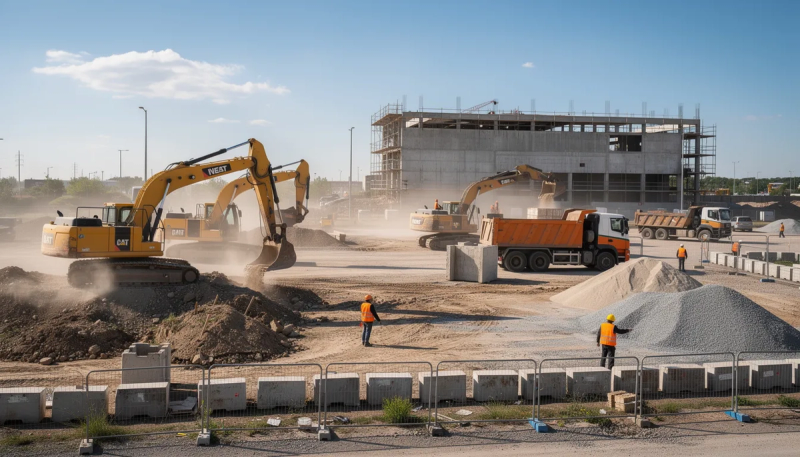
Construction equipment such as concrete mixers, lifts and excavators typically see increased demand between March and June when projects begin. Selling before this period can capture active buyers.
Agricultural machinery follows post-harvest decision cycles between September and November.
Production equipment in sectors such as metalworking and woodworking often aligns with multi-year budgeting cycles, with replacement decisions frequently taken in Q3 and Q4.
The best moment often coincides with:
- Temporary internal overcapacity
- Active market demand
- Logistical windows that avoid production disruption
Accounting logic and depreciation timing
Linear depreciation schedules rarely align perfectly with optimal economic timing.
Companies often consider December as a sale moment:
- Balance sheet optimisation before year-end
- Budget planning for the following year
However, a machine fully depreciated in 2024 may still operate efficiently in 2026. Its full sale price then becomes book profit. Conversely, assets with remaining financing obligations require coordination with refinancing timelines.
Fiscal, financial and operational considerations outweigh purely calendar-based thinking.
Fleet rejuvenation and electrification
Many SMEs accumulated diverse fleets between 2010 and 2020. From 2026 onward, companies increasingly aim to:
- Standardise brands and models
- Reduce spare parts complexity
- Transition from diesel to electric fleets
- Modernise machinery to meet sustainability goals
Fleet rejuvenation becomes a multi-year programme rather than a one-time event. For example, a logistics company phasing out diesel forklifts in favour of electric alternatives may schedule staggered sales aligned with lease expirations or maintenance cycles.
In such cases, “the right moment” becomes a sequence of planned phases rather than a single transaction date.
Operational signals as timing indicators
Internal data often signals the right timing before management realises it.
| Signal | Time Horizon | Implication |
|---|---|---|
| Utilisation consistently below 30% | 12–18 months | Limited contribution to production |
| Increasing unplanned downtime | 24 months | Maintenance outweighs operational value |
| Spare parts difficult to source | Variable | Economic life nearing end |
Recognising these indicators allows companies to initiate sales before value deteriorates further.
Market windows: When buyers actively seek equipment
Buyer behaviour shifts with economic conditions.
During long delivery times for new machinery (2021–2022), used equipment demand surged. Rising interest rates (2023–2024) encouraged buyers to seek cost-effective alternatives.
Upcoming infrastructure projects, production expansions or regional investment waves (2026–2027) can create temporary spikes in demand.
Timing aligned with these market windows often impacts pricing more than fiscal timing alone.
Preparation: Aligning timing with documentation quality
Well-prepared documentation enhances buyer confidence:
- Complete maintenance history
- Technical specifications and upgrades
- High-quality photos and videos
- Information on tooling and accessories
Preparing documentation months in advance creates flexibility to act quickly when favourable market windows arise.

Strategic scenarios
Growth
Phased machine replacement aligned with capacity expansion.
Restructuring
Timing determined by relocation logistics and site consolidation.
Business Closure or Retirement
Sales calendar aligned with staff transitions, lease terminations and facility clearance.
Each scenario defines timing differently.
Negotiation position and time pressure
Time pressure weakens negotiation leverage.
| Situation | Impact |
|---|---|
| Adequate preparation time | More bidders, better price formation |
| Urgent disposal | Focus shifts to certainty over value |
Time includes organisational capacity to manage inspections, data requests and coordination.
Timing as strategic choice
There is no universal best month to sell machinery. Instead, there are identifiable windows shaped by:
- Strategic direction
- Accounting and financing structures
- Operational data
- Market demand
- Succession planning
- Technological transitions
- Electrification initiatives
Selling industrial equipment also contributes to the circular economy. Used machinery gains a second life, components are reused and production assets remain productive.
Specialised auction platforms such asDome Auctionsplay a role as market facilitators, connecting buyers and sellers within defined timeframes and providing international exposure to identify the most suitable counterpart for each situation.

Conclusion
The international market for industrial machinery offers structural advantages for sellers willing to look beyond their region. Timing is not about reacting impulsively, but about aligning strategic direction, financial planning and market dynamics.
The right buyer is often located where demand and valuation align with the remaining productive life of the equipment. A structured, data-driven approach maximises retained value, whether the buyer is local or international.
Frequently asked questions about timing
How far in advance should I start preparing for a sale?
Six to eighteen months before major changes such as automation, relocation, fleet renewal or retirement planning.
Does machine location affect timing?
Yes. Transport costs, regulations and regional demand influence planning.
Should machines be sold in one batch or phased?
This depends on context. Closure favours concentrated sales; fleet renewal often benefits from phased approaches.
What if market prices decline?
Scenario planning helps. Internal strategic needs may outweigh temporary price fluctuations.
How does machine sales timing relate to digital strategy?
Selling machinery demonstrates organisational maturity in data management, CRM usage and commercial coordination. Structured processes improve both divestment and future investments.